
63.6 miles. 13,000 feet elevation gain. Punching my ticket to the Western States lottery.
Originally published May 8, 2019
“It is not in the pursuit of happiness that we find fulfillment, it is in the happiness of pursuit.”
— Denis Waitley
I qualified for the Western States Endurance Run for the first time when I finished Rio Del Lago 100M in November 2018. Even though I wasn’t ready for a race like Western States, I entered the lottery for the 2019 edition, along with 5361 other hopefuls, all vying for one of the coveted 369 spots. With only a 1.7% chance, it was not surprising I wasn’t picked. But the idea of running Western States someday was firmly planted in my being. Therefore, I needed to run another qualifier in 2019.
The decision to run Canyons 100K did not come lightly. I’ve finished other 100Ks before — so the distance was not new to me; but the most I had climbed was 13,000 feet. The course description on Epic Endurance Events’s website both excited and scared me: “Participants will experience some of the most scenic and challenging sections of the iconic WS Trail as they cover up to 15,000 feet of gain through the Canyons between Swinging Bridge and the famous river crossing at Rucky Chucky. Your limits will be tested and your finish will be hard fought as this is the most rugged and difficult of sections of the Western States Trail, RUN TWICE.”
If I could finish in 18 hours, I would get my Western States qualifier. Clearly, this race was at the edge of my possible…It was perfect!
TRAINING
I was familiar with the first half of the course having run Canyons 50K in 2017. It packed almost 9,000 feet of vertical, including a gruesome climb to the Pump from Swinging Bridge at the halfway point, and some gnarly technical trails. It took me over 9 hours to finish (~1.5 hours longer than my average 50K finishes)! I knew I had to train hard to take on the 100K distance.
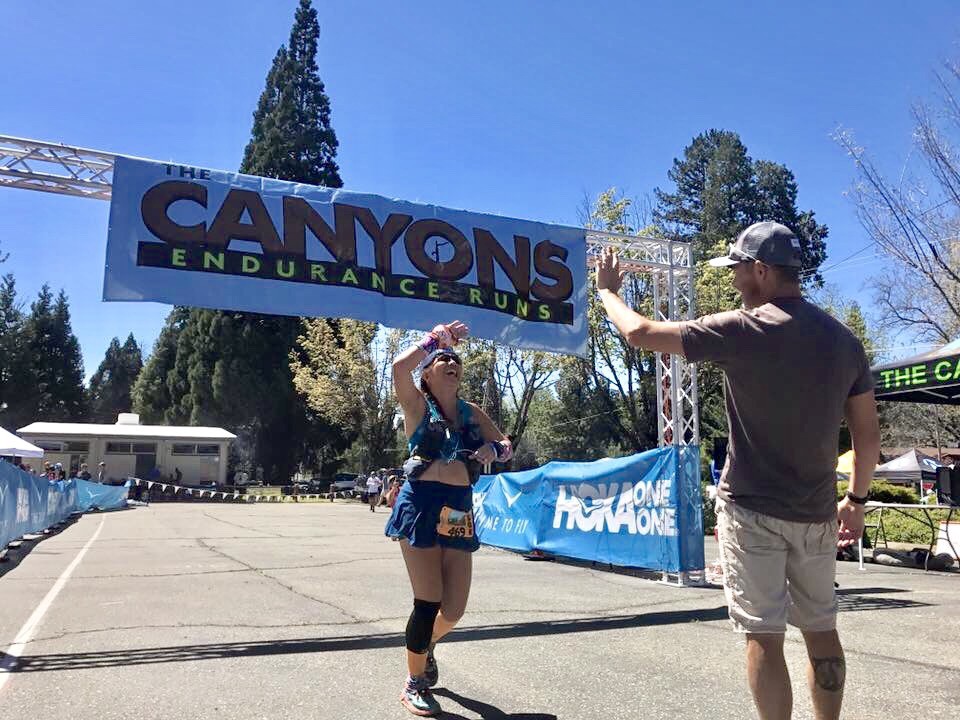
Two weeks after finishing RDL, I started a new training block for Canyons, adopting the same plan I used for my 100-miler, a modified 24-week training plan from the book “Relentless Forward Progress” by Bryon Powell, with peak weekly mileage in the high 50s. Because of the amount of climbing at Canyons, I also wanted to target 100,000 feet of vert in training.
Good and bad of training
- Volume was below target. Managed to run 931 training miles, which was only 83% of the prescribed mileage.
- Consistency improved slightly from previous training block, but there’s still lots of room for improvement. Consistency is key, yet it continues to elude me. The target was to run 5x per week (Tue, Wed, Thu, Sat, and Sun) with 2 rest days, but I only managed an average of 4 runs/week during this training block (succeeded in running 5 times in only 7 out of 24 weeks, 29%).
- Vert training was great. A big component of my training was summiting Mount Diablo seven times prior to the race. It’s the highest peak in the East Bay, and every summit featured long ascents with 4,000 feet of gain. I accumulated over 113,000 feet of vertical during training.

- Became acquainted with the course. Running Ruck a Chuck 50K in mid-March exposed me to the second half of the course. It’s mostly runnable, especially from Cal 1 to Rucky Chucky, except for a few sections like the Elevator Shaft. I also realized that it can get quite hot and humid in the Canyons.
- Faced the scariest bits head on. Due to record snowfall, the course was altered. Instead of going down to Swinging Bridge, the course was rerouted to Gorman Ranch, eliminating the biggest and most dreaded climb of the race. But there were two others that scared me: the 2,500-ft ascent from Eldorado Creek to Deadwood Cemetery, and the 1,800-ft climb from Eldorado Creek to Michigan Bluff. Five weeks before the race, I went on a training run with Todd, Erica, Jason, and John (Thanks for taking us!) It was a rainy and cold day — it even snowed! — with lots of downed trees blocking our path. Running this section reacquanited me with the front half of the course, and turned out to be critical in my mental preparation as well as in creating my pace chart.
- Gained confidence from last long run. I chose American River 50M as my last long run leading up to Canyons. It was great time-on-feet training, with lots of rollers (similar to the back half of Canyons), and the last 3 miles are uphill (same as Canyons). With Jaime pacing me, I ran a strong second half, giving me a confidence boost as I started my taper. But was it too close to Canyons? Will I recover in time?
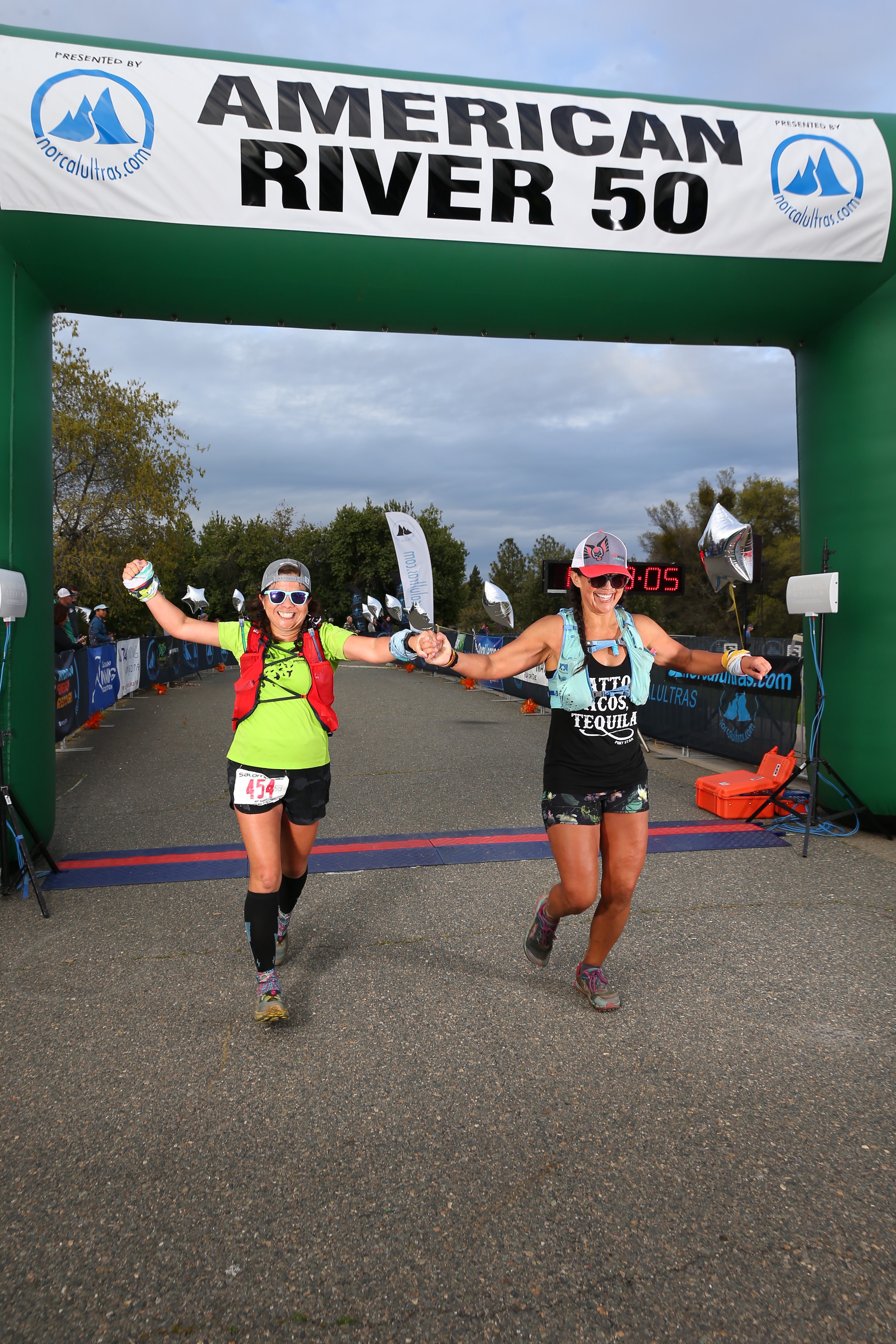
I knew I was going into the race a bit undertrained. However, despite missing some targets, I was satisifed with this training block. I did what I could and enjoyed the entire process — the races and training runs with my trail tribe, even the rest days and taper — and was grateful to toe the line injury-free. It was time to put the training to the test.
RACE WEEK
Pace chart
As is now my ritual before a goal race, I prepared a pace chart which included the elevation profile. There was a little uncertainty about the total distance of the race due to the course change. The race website showed total mileage of 63.6, which is technically 102kms. I suppose they added 2kms to make up for the loss in total elevation gain.
My goal was to finish the race in 18 hours. My strategy was to target 17 hours to create a buffer against cutoffs. Using my Strava data from past races and training runs on the course, I came up with an Optimistic Case (a sub-17 hour finish if I had a perfect day), and a Realistic Case with a sub-18 finish. I hoped to end up somewhere in the middle.

Last-minute changes
During race week, we learned about a few changes through the runners instructions email, notably:
- There was no vehicle access to Michigan Bluff and Rucky Chucky aid stations (crew and pacers could hike in and out),
- Drop bags for Rucky Chucky aid station were canceled (they were only allowed at Foresthill, the halfway point/finish), and
- Packet pick up was available on Friday afternoon; bibs still needed to be picked up on race morning.
It was a bit unsettling, but I adapted and made last-minute adjustmets to my race plan, pace chart, and mindset.
Time to relax
On Friday, I headed to Auburn early and got a pre-race flush from Voloyce at Monsters of Massage. He did the same for me prior to RDL with great results. I’m not superstitious, but I think he brings me good luck.

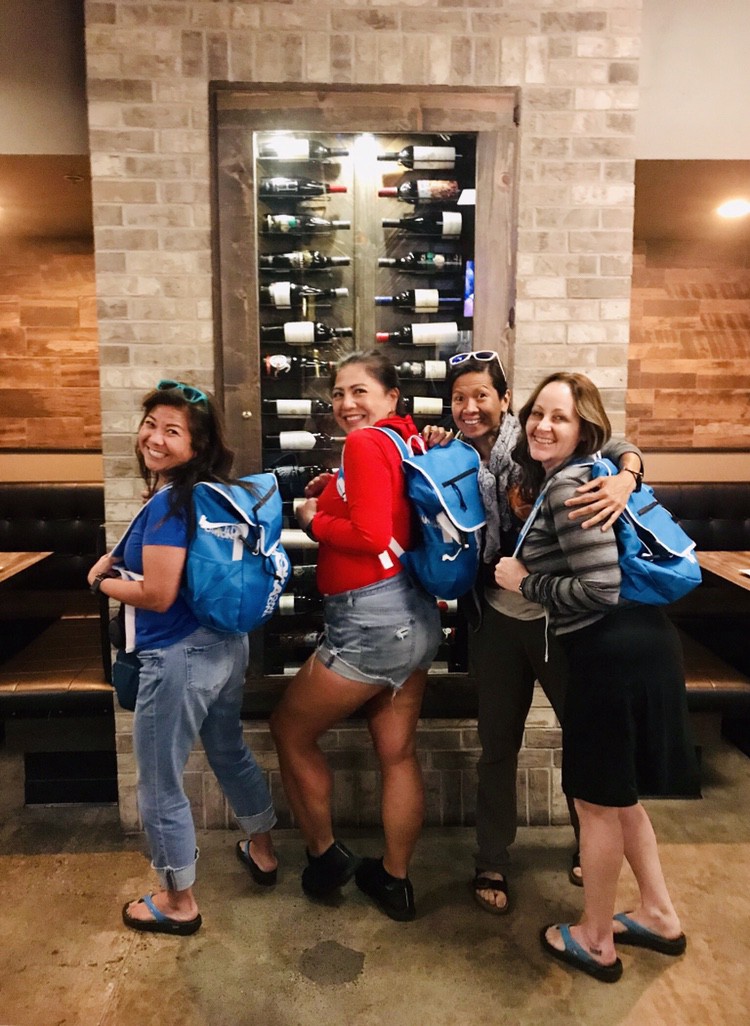
After my massage, I checked in at the Holiday Inn Express (there’s an In and Out right next to it!) and chilled until it was time to go to packet pick up at the Auburn Aid Station — Trails & Ales. The swag was amazing and included a Hoka One One backpack, a Rabbit tech shirt (so soft!), and a trucker hat.
After a Q&A session with elite athletes, we headed to Tap & Vine for our pre-race dinner, had last-minute discussions about race plans, and called it a night.
RACE DAY
Woke up at 3am; had my usual pre-race breakfast of boiled egg, cinnamon raisin bagel and cream cheese, and coffee (~500 calories); and was ready by the time Jaime picked us up at 4:15am.

We arrived at Foresthill early, got our bibs and mug shots taken for Ultralive.net tracking, dropped off my lone drop bag, and tried to relax. I was nervous, excited, and relieved, because the long months of training were over. I had a plan and the support I needed. All that was left was to run and take what the day gave me. I was beyond grateful for this opportunity.
Foresthill to Gorman Ranch (Start — M8.0)
Shortly before 5:30am, we assembled at the start line, took some group shots, and listened as Race Director Chaz Sheya gave final instructions. Then we were off.
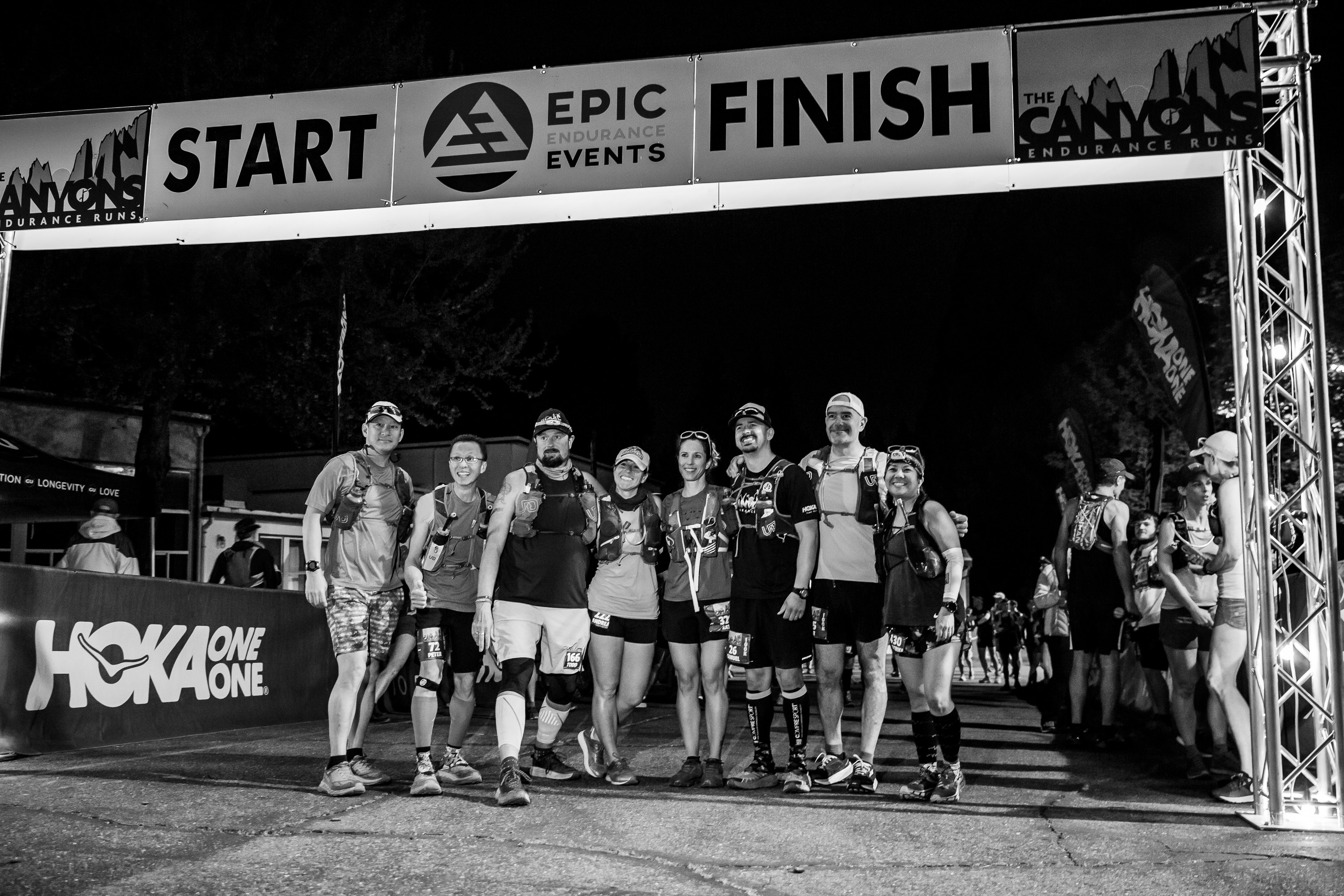
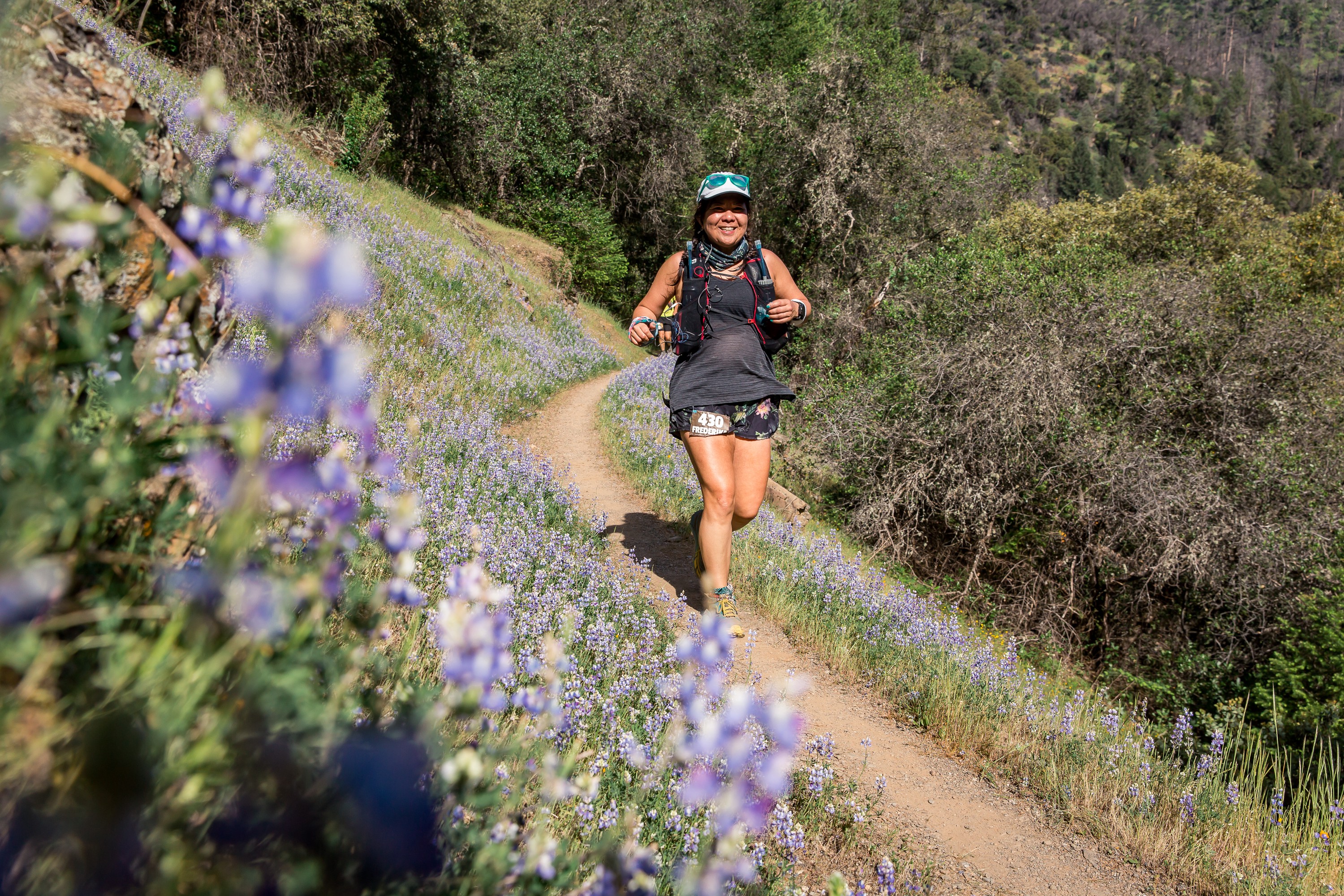
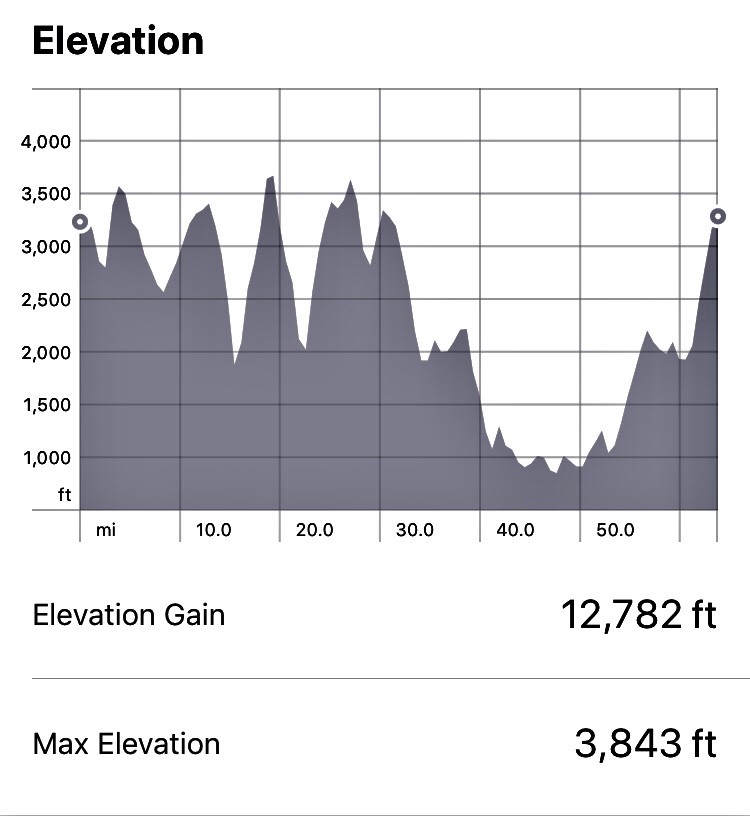
I started in the middle of the pack running at a tempo pace down Foresthill Rd and Bath Rd. When I arrived at Volcano Creek, there was a bit of a line but it moved quickly. We crossed the creek with the help of slack lines. The sun started to rise as we took on the first climb of the day (1,100 ft in1.7 miles).

Around Mile 4, fellow Ginger Runner Crew member Ian caught up to me and introduced himself. I had a great time as we chatted and ran downhill at a controlled pace.
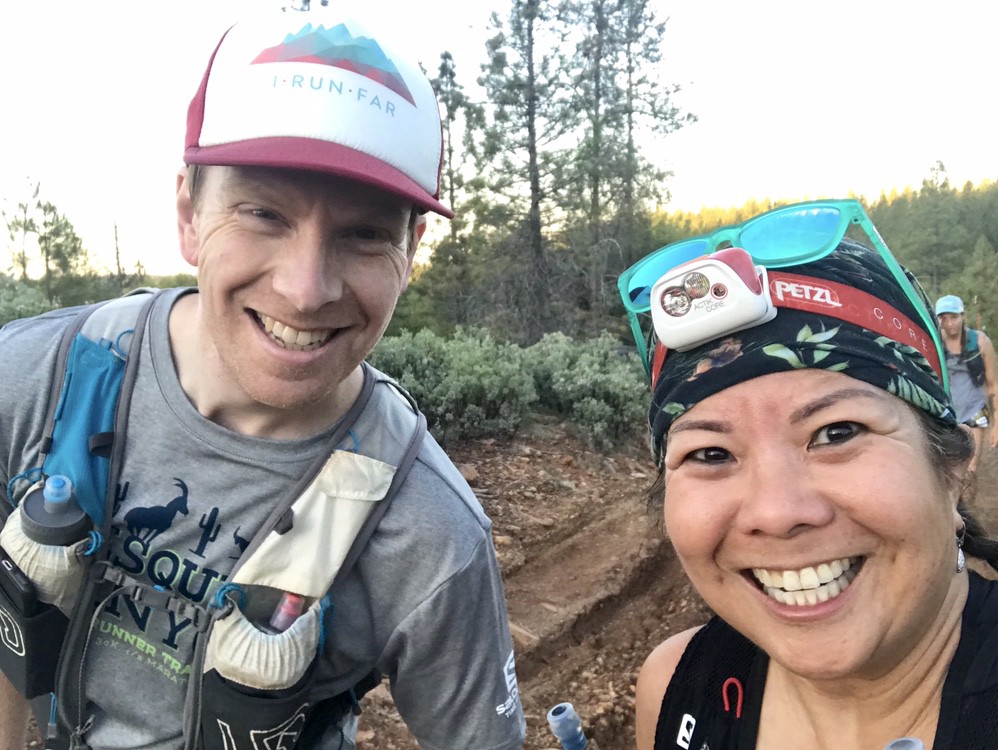
At Mile 4.5, we turned right towards Gorman Ranch (the reroute). It’s a smooth fire road that slowly descends towards the aid station. This was the first out-and-back section, and we started seeing the lead pack around our Mile 6 (they were 4 miles ahead of us). It was awe-inspiring to see them running uphill!
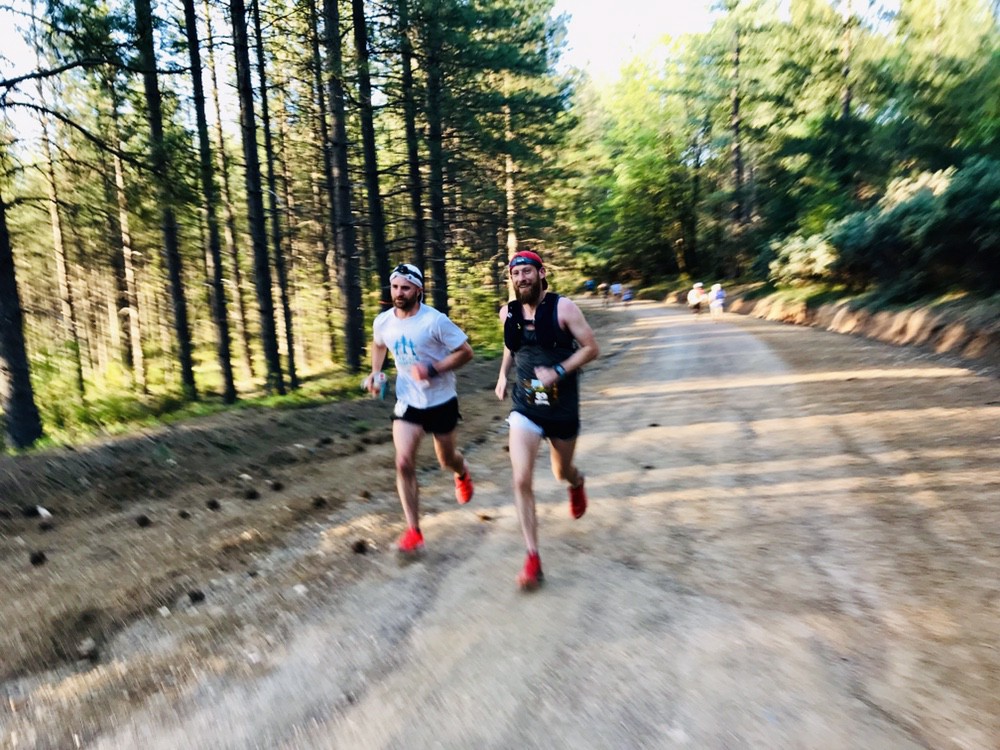
I realized I was ahead of pace when my speedy friend John (who finished in 15:11:42) passed me at Mile 7 —What was I doing running in front of John?!?! I arrived at Gorman Ranch at 7:18am, 4 mins ahead of Optimistic Case. Uh-oh, too fast. Must pull back!
Gorman Ranch to Michigan Bluff (M8.0-M12.5)
After quickly refueling and refilling my soft flasks at Gorman Ranch, we started heading back the way we came. It was a slow uphill grind, but it was great to see and high-five friends going the opposite direction. I followed a group of runners who alternated between running and walking the hill, and decided to take my cue from them. I arrived at Michigan Bluff at 8:21am, 7 mins ahead of Optimistic Case.
Michigan Bluff to Deadwood Cemetery (M12.5-M18.5)
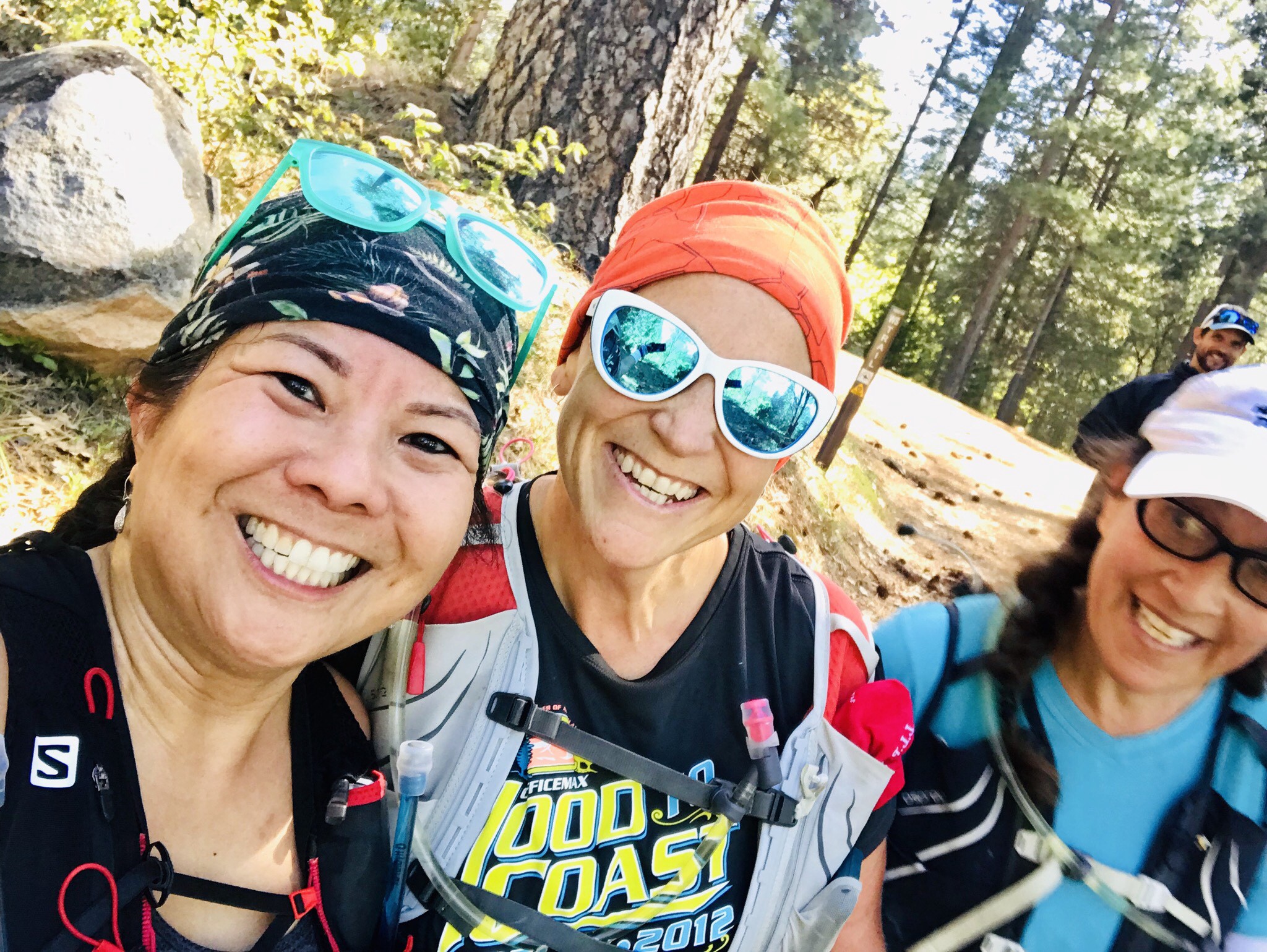
From Michigan Bluff, we descended 1,800 feet over 3 miles to Eldorado Creek. I caught up to Angela, and we agreed to take it easy on the 2,500-foot, 3-mile climb to Deadwood Cemetery. This was the biggest climb of the day and we wanted to give it plenty of love. Besides, it was early in the race, and we were ahead of pace. This was the second out-and-back section, and we pulled over many times to give descending runners room. We finally got to Deadwood Cemetery, the turnaround point, and collected our Hoka One One bracelet — proof that we made it to the top. We celebrated the fact that the longest climb was now behind us!
Deadwood Cemetery to Eldorado Creek (M18.5-M21.5)
From Deadwood, Angela and I ran a steady pace back down to Eldorado Creek. We had a lot of fun chatting about races we’ve done and ones we were planning to do. Angela taught me “W.T.F.” — short for “water, trash, food” — each time I came into an aid station. But she also said, “200 miles is easier than 100 miles”! Oh, the silly things runners say in the middle of an ultra!
For the first time, we saw the course sweeps. We were comfortably ahead of them, but it was a somber reminder that cutoffs were coming.
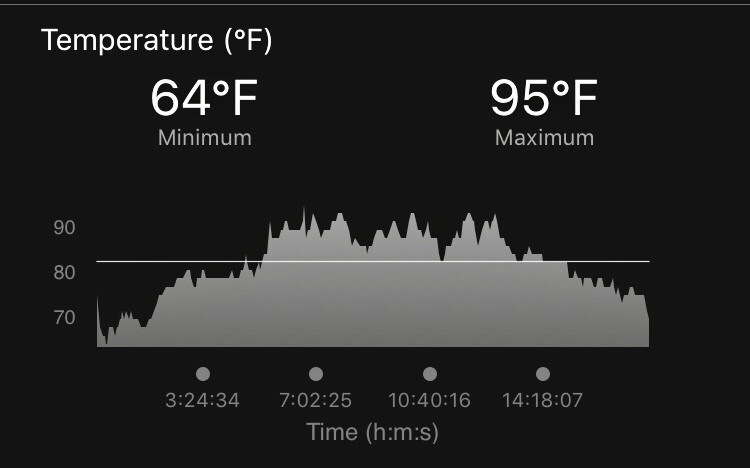
I started to feel a niggle in my knees as I descended. The downhill running was taking its toll so I slowed down. By now, temps were starting to rise. At Eldorado Creek, they were rationing water and encouraging us to take ice first. My friend David who was volunteering helped refill my soft flasks with ice for the long climb back to Michigan Bluff. Thank you, David!
Eldorado Creek to Michigan Bluff (M21.5-M24.5)
It was now around 11:00am and temps had climbed to the 80s. I honestly think this felt harder than climb to Deadwood, perhaps because of the heat. I just kept power hiking up the trail, and soaking my buff in every stream we crossed. About a mile from Michigan Bluff, a group of runners were stopped in front of me. There was a big rattlesnake on the mountain side of the trail! Angela convinced it to move towards the cliff side, and we were able to run through. I was too scared to take a picture. Minutes later, we saw volunteers running the opposite direction, carrying heavy containers full of water. Volunteers are the best!
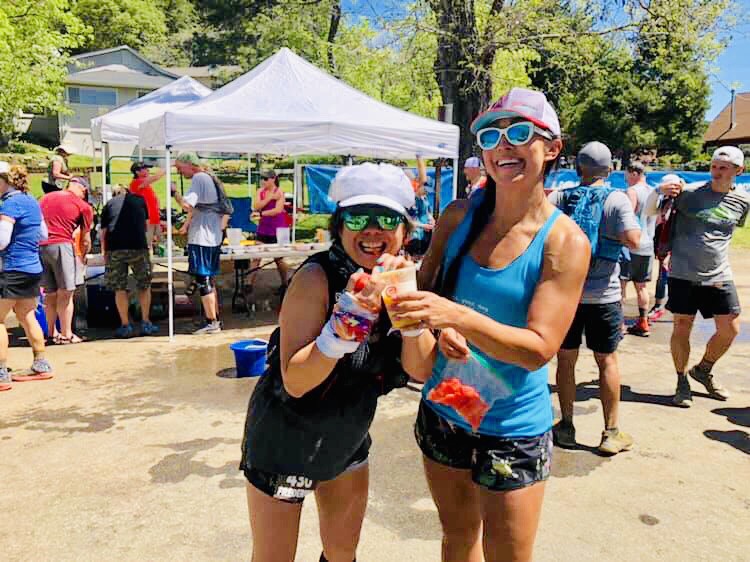
I arrived at Michigan Bluff at 12:06pm, 4 mins behind Optimistic Case and 15 mins ahead of Realistic Case. Jaime had a Jamba Juice mango smoothie and a bag of delicious bite-sized watermelon waiting for me! It was soooooo refreshing and perfect after that long, hot climb! She also handed me my Iced Cap full of ice. If you don’t know what an Iced Cap is— it’s the best thing for managing heat! It looks like a pork bun on your head, but as you run, you get a cool spray from the melting ice.
Michigan Bluff to Foresthill (M24.5-M31.0)
Angela and I continued running together but when we got to the rollers, I let her go ahead. She was moving really well while I was nursing my aching knees. Bath Rd seemed to go on forever, but finally, we turned left on Foresthill Rd, and half a mile later, ran under the blue Hoka One One arch that signaled the 50K mark. I arrived at Foresthill at 2:00pm, 17 mins behind Optimistic Case and 6 mins ahead of Realistic Case.
Immediately, John who was crewing for Todd, led me to a chair and refilled my soft flasks. I had told Jaime earlier at Michigan Bluff that I needed to change socks because of blisters that had developed on the balls of my feet from the water crossings. Jaime removed my wet shoes and socks; and as I raised my leg to apply lube and put on dry socks, my left quads cramped. Ugh! I drank coconut water and pickle juice as Jaime massaged my thighs, and John handfed me some PB&J squares. He then packed some chips and grapes in a Ziploc bag for me to snack on later. Thank you, Jaime and John, for getting me in and out of Foresthill!
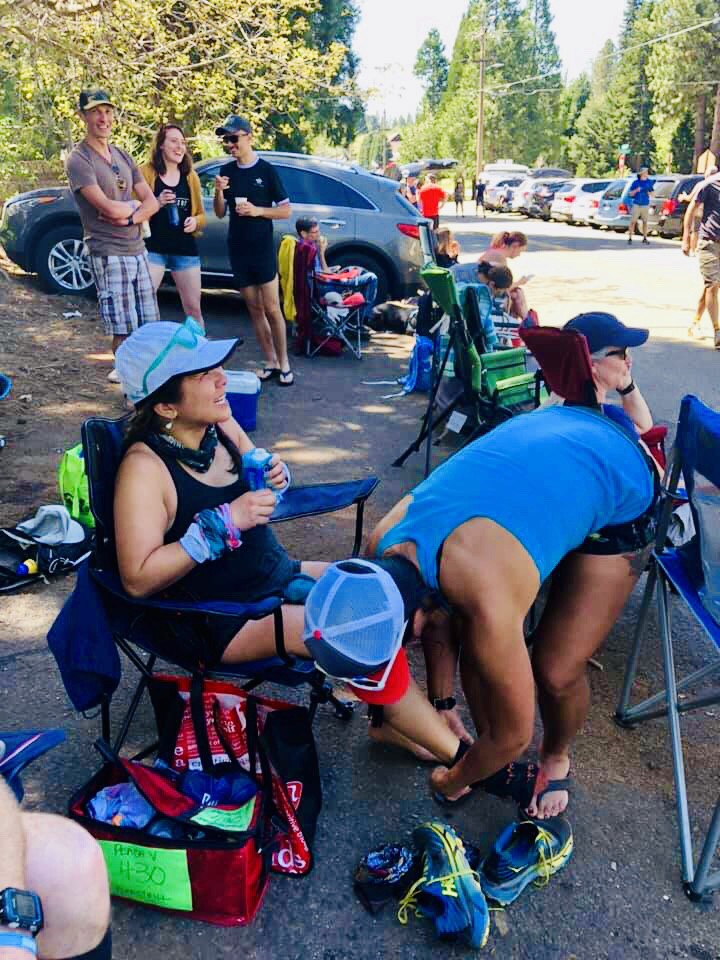
I have to say Foresthill is one of the most iconic parts of the race — lots of festivities in front of Foresthill Elementary School, cars lined up on either side of the road, and crews and runners sprinkled throughout. It was a hub of activity that made me think of Western States — such a special moment to walk down that road. Jaime kept feeding me and urged me to continue hydrating and staying on top of my fluids and electrolytes.
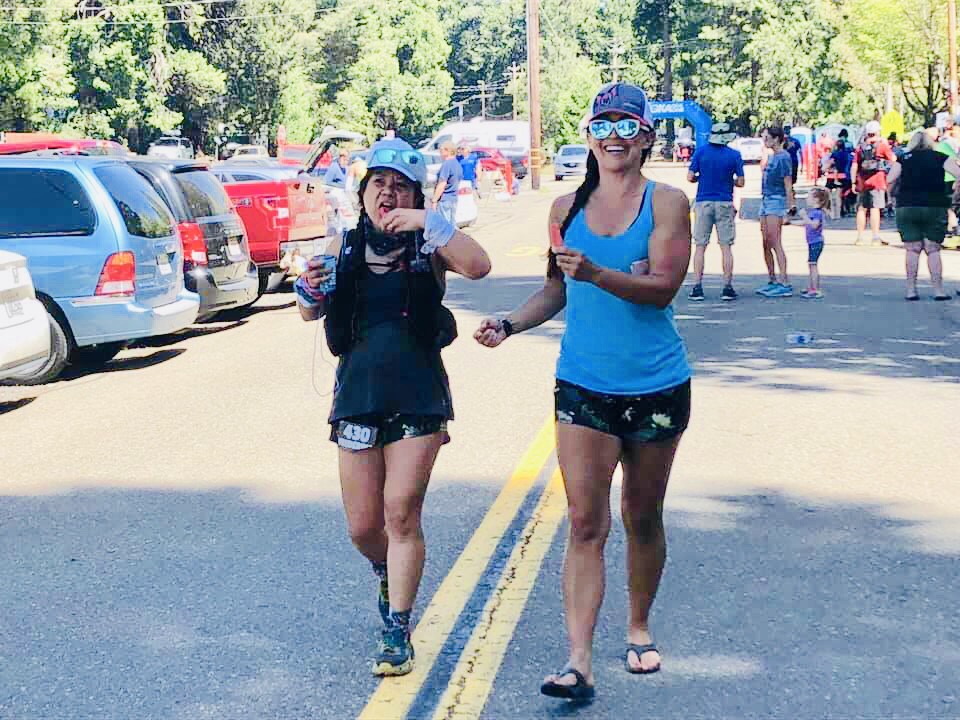
I was grateful to cover the first 50K in 8.5 hours because it gave me 9.5 hours to run the second half, which had considerably less climbing. But the heat, my cramping quads, niggle in my knees, and blisters had me worried about making cutoffs.
Foresthill to Cal 2 (M31.0-M40.5)
The section from Foresthill to Cal 1 (M35.5) was new to me and all downhill. I made a mental note to save some for the end, because these would be the final miles of my race going in the reverse direction. Yikes! Cal 1 came surprisingly early and I was glad to see Mark volunteering.
The Cal 1 to Cal 2 section consists mostly of runnable rollers. Karel kept me company for a little bit, but I ran most of it alone — a slow, steady pace, reminding myself to stay in the moment and not worry about time. I started seeing the lead pack — everyone was looking pretty rough, but at least they were less than 10 miles to the finish. When I got to the sharp descent known as the Elevator Shaft, I knew the aid station was nearby. I arrived at Cal 2 at 4:19pm, 19 mins behind Optimistic Case and 11 mins ahead of Realistic Case.
Cal 2 to Rucky Chucky (M40.5-M47.8)
It was a long and hot downhill from Cal 2 to the river. I knew I was slowly falling behind pace and wasn’t going to make it to the river by 6pm (cutoff was 7pm). Doubts were creeping in, and I just kept repeating to myself, “Just get to the river”. As I steadily shuffled, the returning runners started to give me right of way and cheer me on. Seeing my friends who were heading towards the finish lifted my spirits. It felt like forever, but I eventually got to Rucky Chucky at 6:14pm, 27 mins behind Optimistic Case and 9 mins ahead of Realistic Case. I had 5 hours and 16 mins to get to the finish.
Jaime was waiting for me with my waist light and a Starbucks Coffee Frapuccino that she hiked 2.5 miles down from Foresthill Rd because Driver’s Flat Rd was closed to vehicles. The frapuccino had melted in the afternoon heat, but it was delicious nevertheless. She massaged my calves and quads, as I sat in Michele’s chair eating bacon, tater tots, quesadilla, and chicken broth. After regrouping, we set off for the final 16 miles.

Rucky Chucky to Cal 2 (M47.8-M55.1)
I told Jaime I could shuffle the flats and downhills, but had to power hike the uphills. She ran a few meters in front me, giving me calves to follow. I was so thankful for her company, although I don’t think I was very good company myself. As we were making the climb up to Cal 2, Jaime offered her Stroopwaffle to me, and I curtly declined, saying I had my own. And when she tried to encourage me to “shimmy” up an incline, I said “No, I can’t”. So rude! I’m sorry, Jaime. I’ll just blame it on the mosquitoes that attacked us when dusk fell. We arrived at Cal 2 at 8:29pm, 7 mins behind Realistic Case and only 31 mins before cutoff. All my cushion had disappeared. I needed to push the rest of the way to make it under the 18-hour cutoff.
Cal 2 to Finish (M55.1-M63.6)
At Cal 2, a volunteer mentioned that we just had 5 miles to the next aid station then 3.5 miles to the finish. I figured we needed 1.5 hours for the last leg because it was all uphill. But soon after leaving Cal 2, we were confronted by the Elevator Shaft, which is neither that steep nor that long, but seemed insurmountable on fatigued legs. It took all my willpower to get up that hill.
At Cal 1, we refueled for the final leg. I was dismayed when the volunteer declared it was only 3.7 miles to the finish! What happened to 3.5?!?! We were cutting it really close. All I could do was power hike those last 3+ miles. Just keep climbing, just keep climbing. I searched my pockets for the last bit of Honey Stinger Chews for that surge of energy. After an eternity, we reached flattish ground and started shimmying again. I kept praying for us to reach the pavement soon so I could run. With 25 minutes to cutoff, the trail ended and we were finally on pavement. Then we saw John. Ohmygawd!!! We’re almost there!!!
It’s a 0.4-mile stretch once you make a right turn on Foresthill Rd. You see a light in the distance that you hope is the finish line. Then you start passing parked cars and storefronts as you get closer. Then finally you hear them before you see them. These wonderful people — all waiting to welcome you back to the finish — cheering and celebrating your arrival!
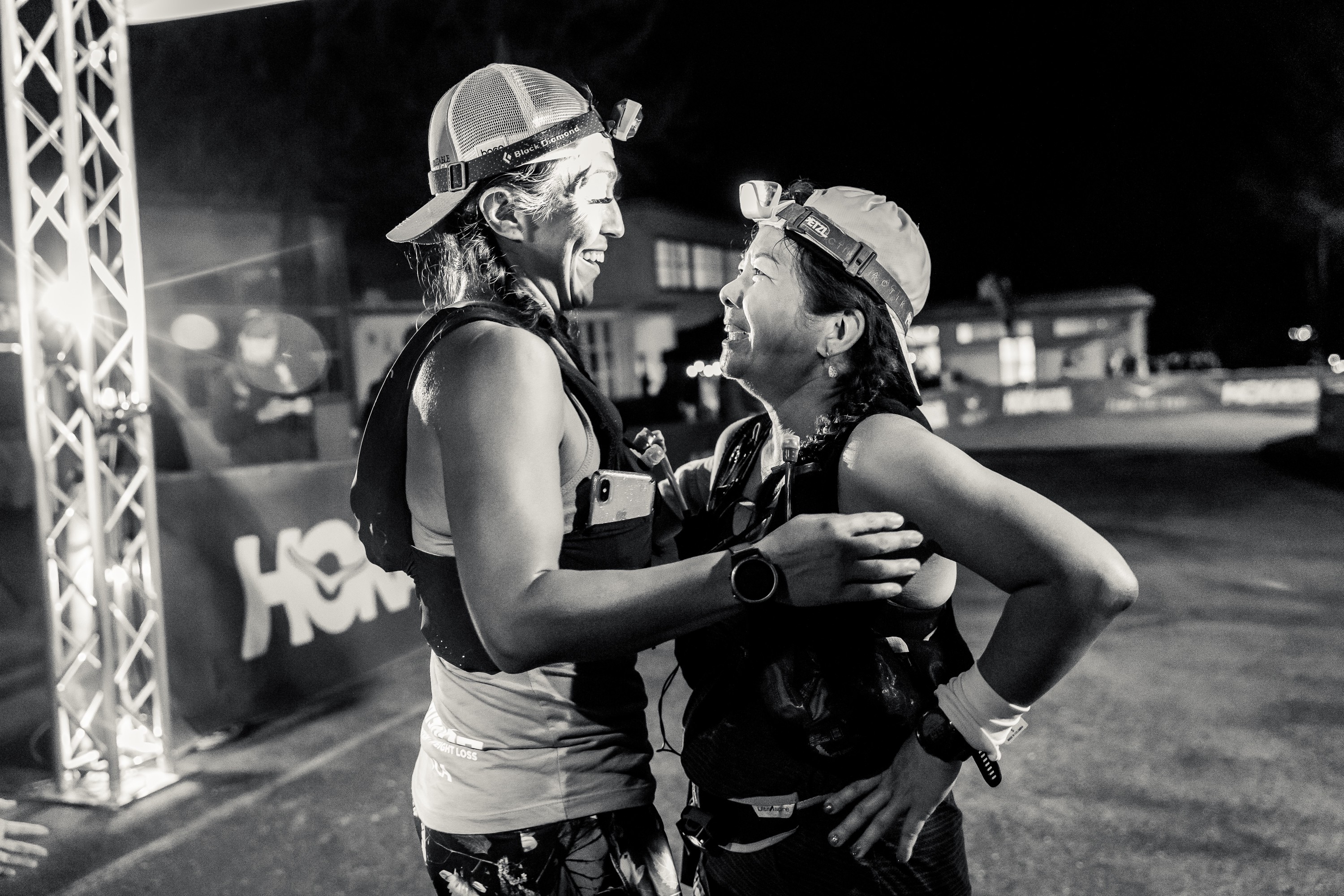
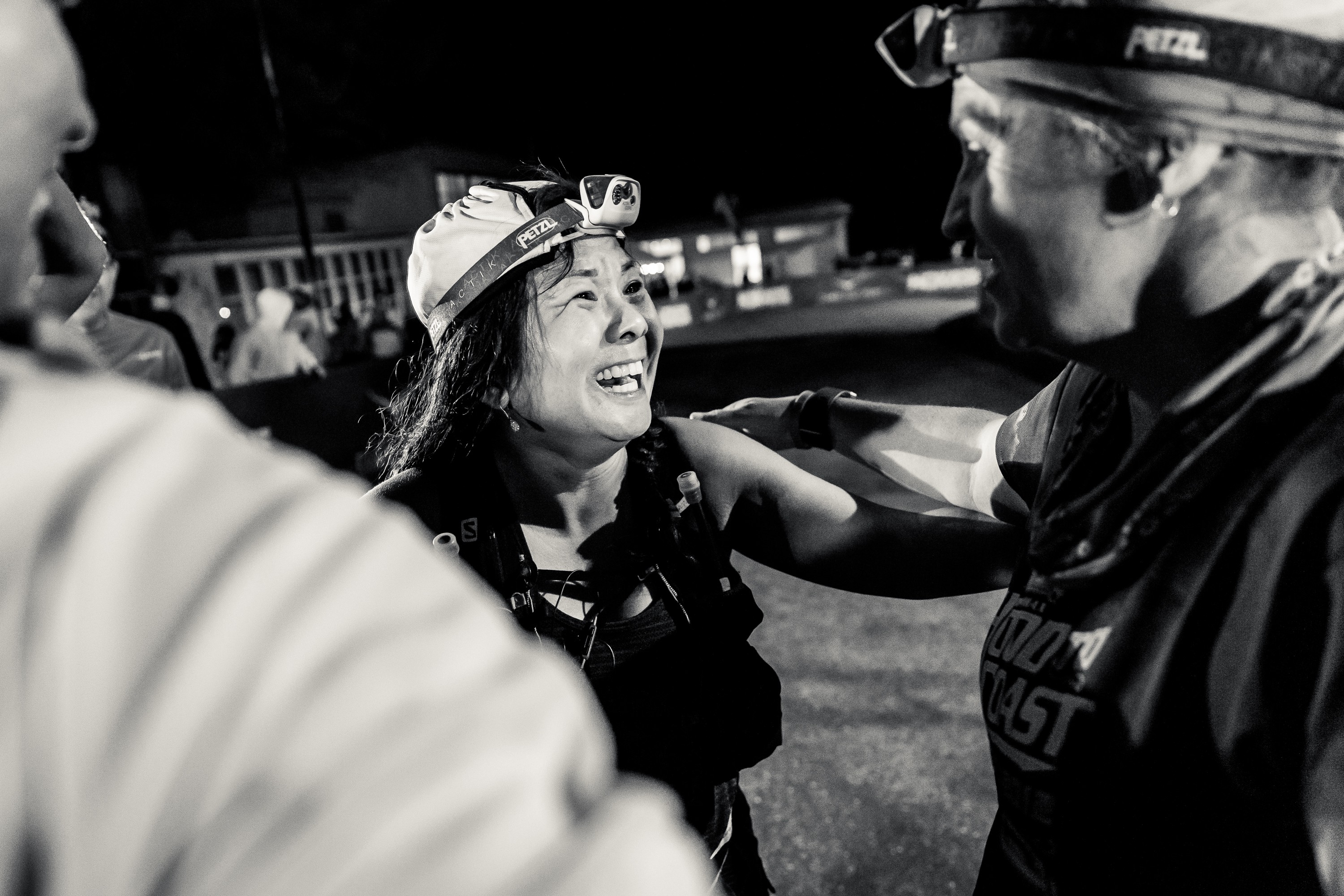
With 17:42:35 on the clock, Jaime and I crossed the finish line of the Canyons 100K. And I earned my Western States qualifier.
#HappinessOfPursuit
Race stats
- 293 finishers out of 373 starters (79%)
- 80 drops (21%); 85 DNS (18%)
- 63.6 miles
- 12,782 feet elevation gain (source: my Garmin Fenix 5)
- Temperature — hot! (source: my Garmin Fenix 5)
My numbers
- Finish time — 17:42:35
- Pace — 16:42/mile
- Overall — 256/293 finishers (272 Western States qualifiers)
- Females — 66/86
- F40–49 age group — 30/37
 Life’s a Peach.Run