
Originally published on September 27, 2017
On August 31, 2017, I got to run a bucket list race — the OCC — and take part in the most exciting trail running adventure I’ve ever experienced: the Ultra Trail Mont Blanc (UTMB), World Summit of Trail Running!
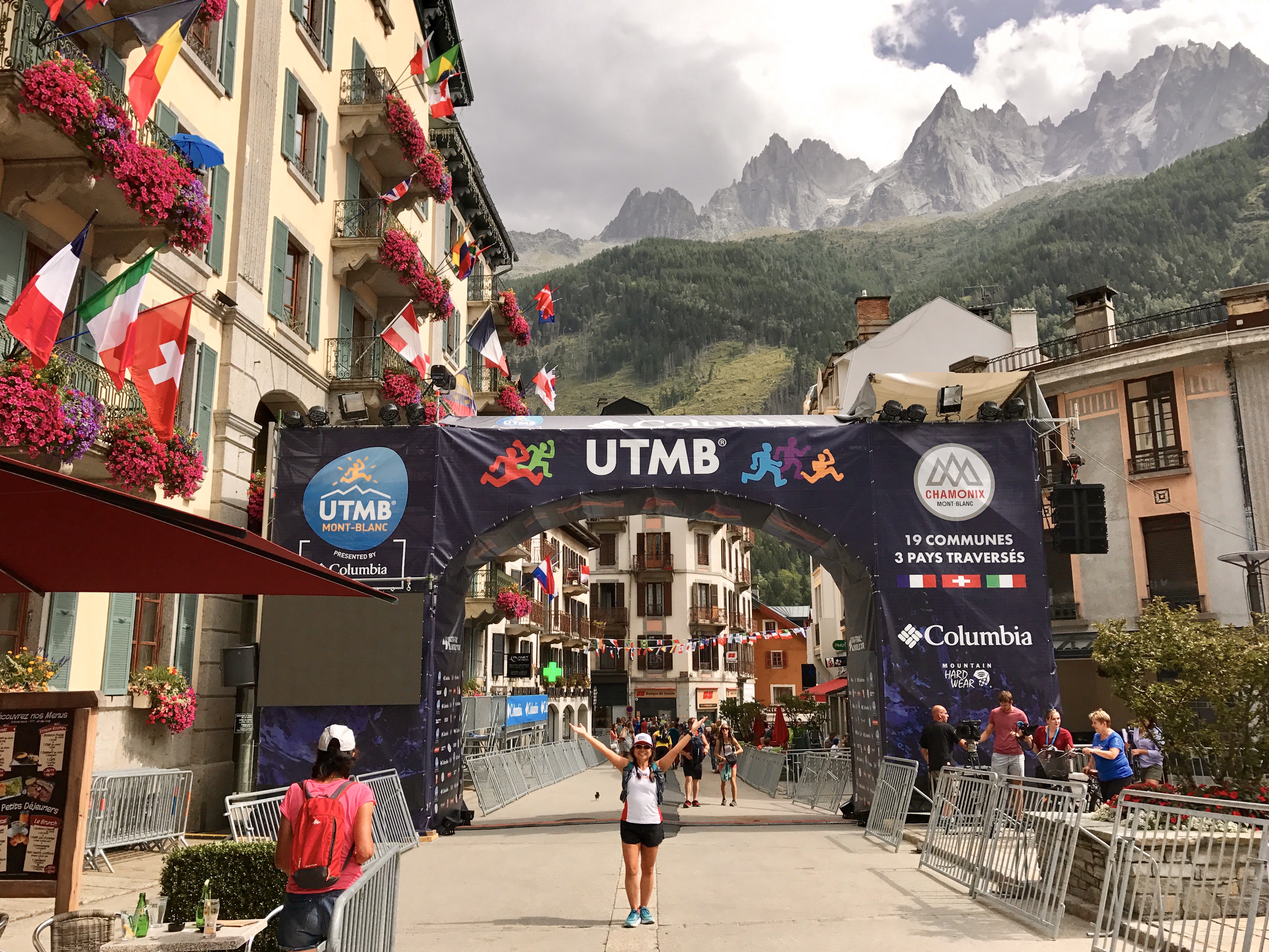
The UTMB is to trail running what Tour de France is to cycling and Boston Marathon is to road racing. It’s set in Chamonix, an Alpine resort in the French Alps at the foot of Mont Blanc. Thousands of trail runners from around the world gather at the end of August to run in one of five events held during the week: UTMB (100 miles), CCC (101km), TDS (119km), PTL (290km), and OCC (56km).
OCC is short for Orsieres-Champex-Chamonix, a semi-autonomous 56km (35 miles) mountain race, with over 11,000 feet of elevation gain. It starts in Orsieres, Switzerland and finishes in Chamonix, France. Yes, you get to run in two countries in one race!

Getting in
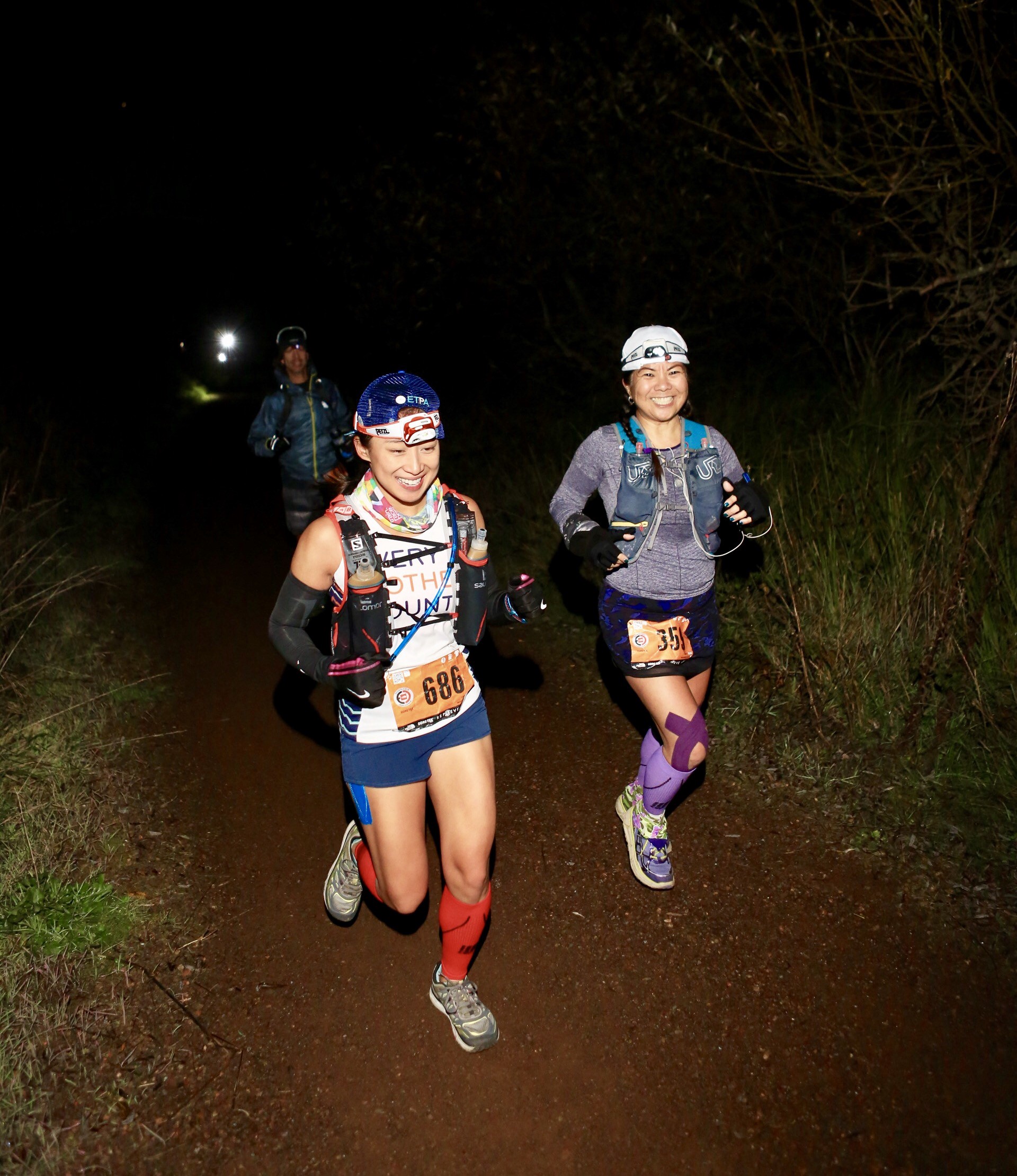
To participate in OCC, you must have 4 points from up to 2 qualifying races within a 2-year timeframe. I earned 4 points when I finished the 2016 North Face Endurance Challenge 50M in San Francisco. While sharing a few miles early on, my friend Camille mentioned that we would have enough points to enter the lottery for OCC when we finished this race. That was the first time I heard about OCC, and the seed was planted. (You can check here to find out if you have enough points to qualify for the different UTMB races in 2018.)
2017 was a busy year for my family— my daughter was graduating from high school and we already had travel plans for the year. But I read that if you didn’t get selected in 2017, your chances would double in 2018; and if denied twice, you would get automatic entry the third year. My husband and I decided that I would enter the lottery and, if chosen, we would “cross that bridge when we (got) there.” So I entered the drawing. In January 2017, I got the email informing me I had been selected to participate in the 2017 OCC. Beginner’s luck!! Woo hoo!!
I’m in. Now what?
In most races, you register at ultrarsignup.com (so easy!), train, then show up on race day. With OCC, there are a number of requirements to fulfill and logistics to arrange prior to the race.
- Complete registration. I created an account on the UTMB site and paid the balance of the registration fee. This was due by end of January.
- Research. Once I got in, I devoured all the information on the website, Googled race reports from past participants, watched YouTube videos, read the official UTMB monthly e-newsletters, joined the UTMB Facebook group, and reached out to local Bay Area runners who had run OCC in prior years. Thanks to Emily Yu and Scott Noack for sharing your experiences with me and answering my many questions.
- Medical clearance. I had to upload a medical certificate signed by my doctor stating I “do not reveal any indication against the practice of running in competition”. This was due in May.
- Travel arrangements. Geneva International Airport is the closest airport to Chamonix (62 miles). My friend Raquel and I decided to rent a car. [Pro tip: there are two tolls (total €6) on the Autoroute Blanche A40, the motorway to Chamonix Valley. Make sure you go to the lanes that accept cash/credit cards. Do not go to the lanes requiring an RFID card, or you’ll end up hollering for help in the middle of the highway — true story.] Since public transportation is very good, I would opt for that option on future trips. There are door-to-door shuttles from the airport to your destination. And once there, you get free train and bus access in the Chamonix Mont-Blanc Valley upon presentation of your carte d’hôte/guest card (supplied by your hotel).
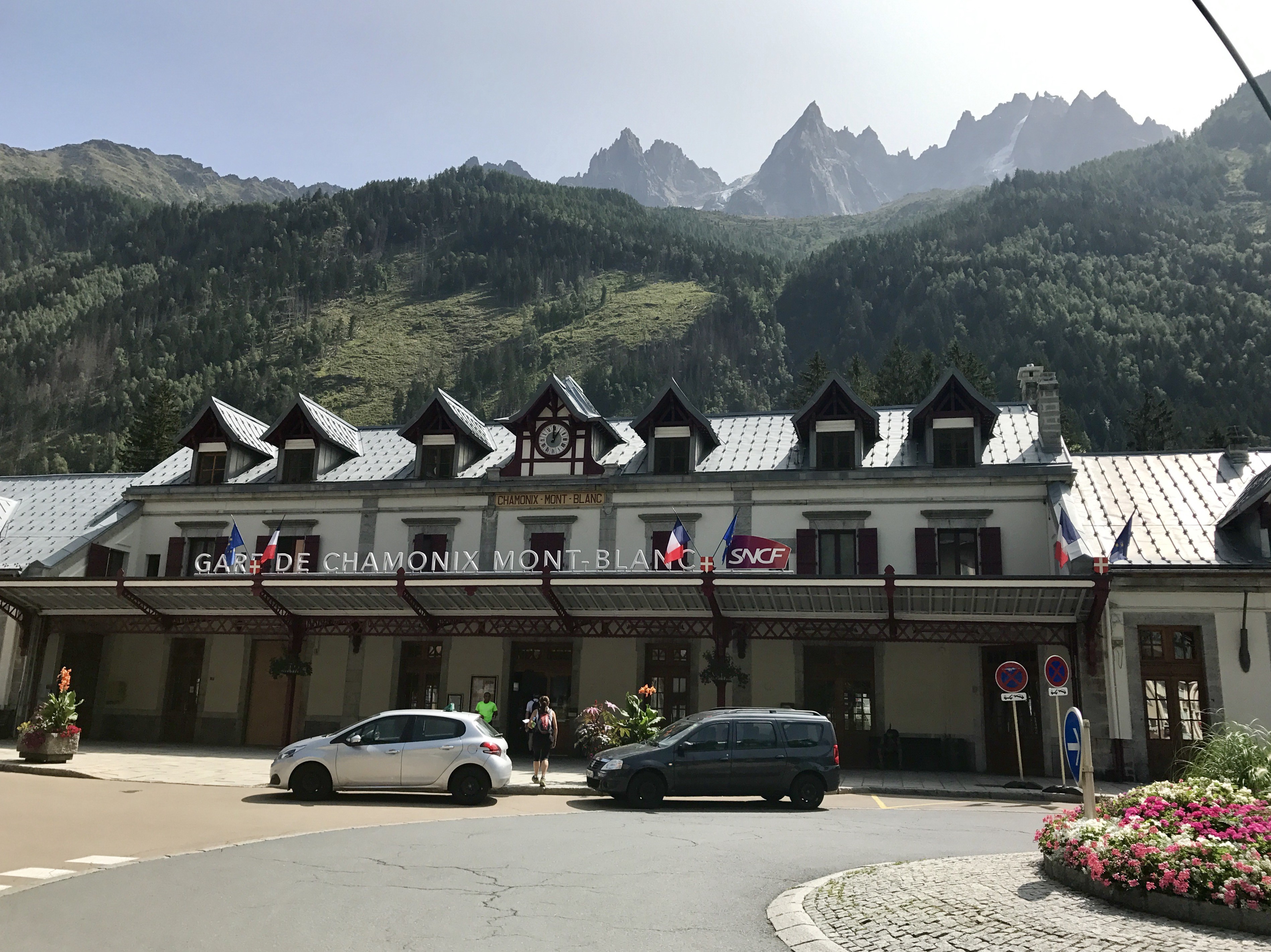
- Hotel accommodations. We booked an apartment at the Residence & Spa Vallorcine Mont-Blanc via links on the UTMB website. It was the perfect home base for me and my crew. Amenities included a garage, kitchen, and laundry room. It was conveniently located. Right behind the hotel is the Vallorcine train station, where you can catch a train to Chamonix (30-minute ride). That’s also where I caught the shuttle to the start line on race morning, and it was one of the main aid stations on the OCC, CCC, and UTMB courses — which made crewing and spectating very easy.
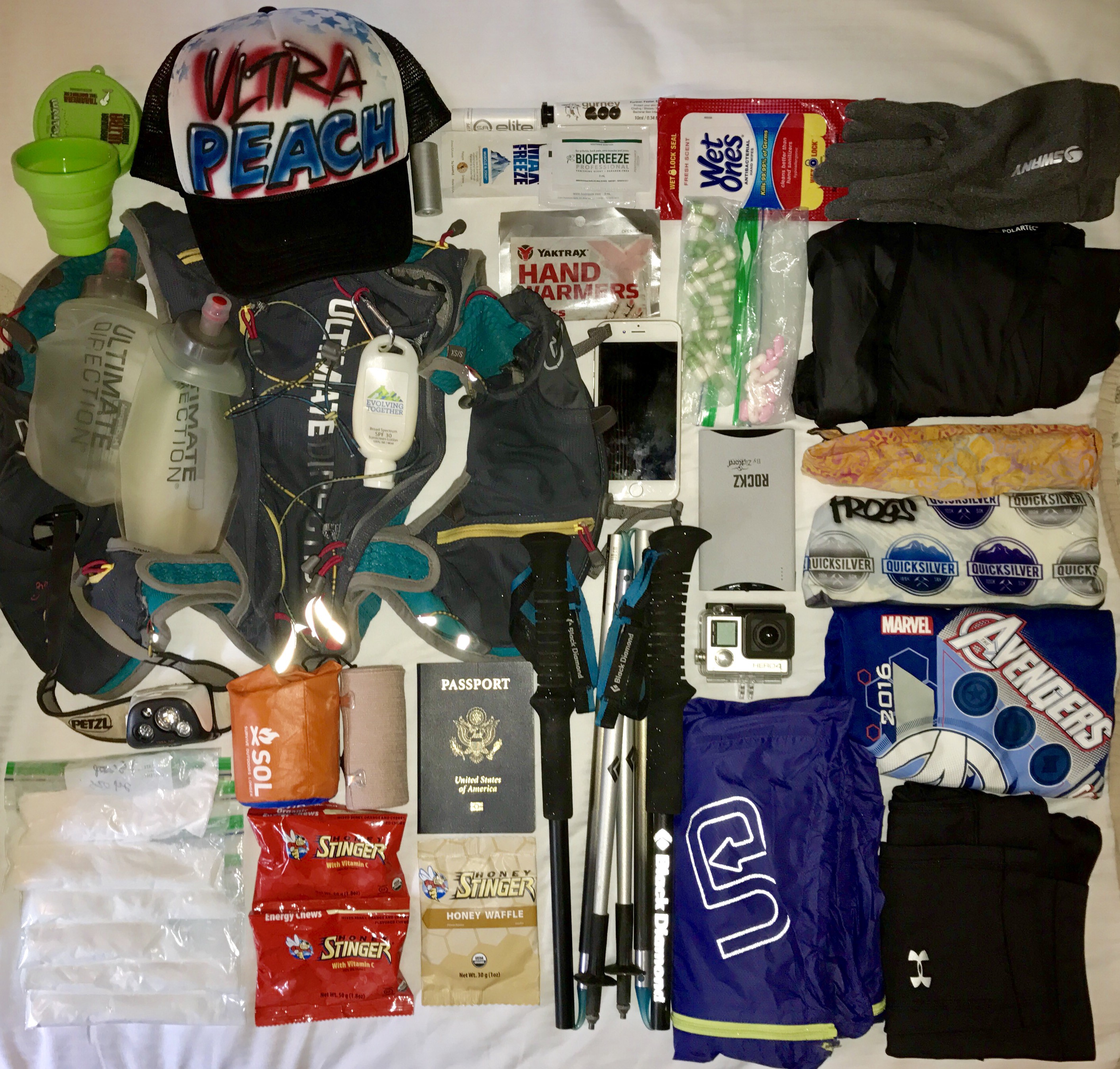
- Obligatory equipment. The UTMB has a long list of obligatory equipment. Gather them early and train with them. The organizers will inspect them at bib pick up before handing you your bib and may conduct random inspections on the course. The weather in the mountains can change dramatically without much warning. And the terrain can be treacherous. Therefore, you are required to bring appropriate gear to protect you from the elements and to use in case of emergency.
- Medical emergency insurance. Runners are required to have individual accident insurance which covers any eventual search and rescue and repatriation costs in France, Italy, and Switzerland. You can get it from the organization of your choice. I got mine through International Trail Running Association (ITRA).
- Shuttle to the start line. The June UTMB e-newsletter provides details on the complimentary shuttles. You have to reserve your spot through your UTMB account.
- Bib pick up location. You have a choice of picking up your bib in Chamonix or Orsieres. I chose Chamonix due to proximity to Vallorcine, and it’s where the expo is located.
Training
Between getting picked in the lottery and the actual race, I had a couple other big races on my calendar for the first half of the year, namely:
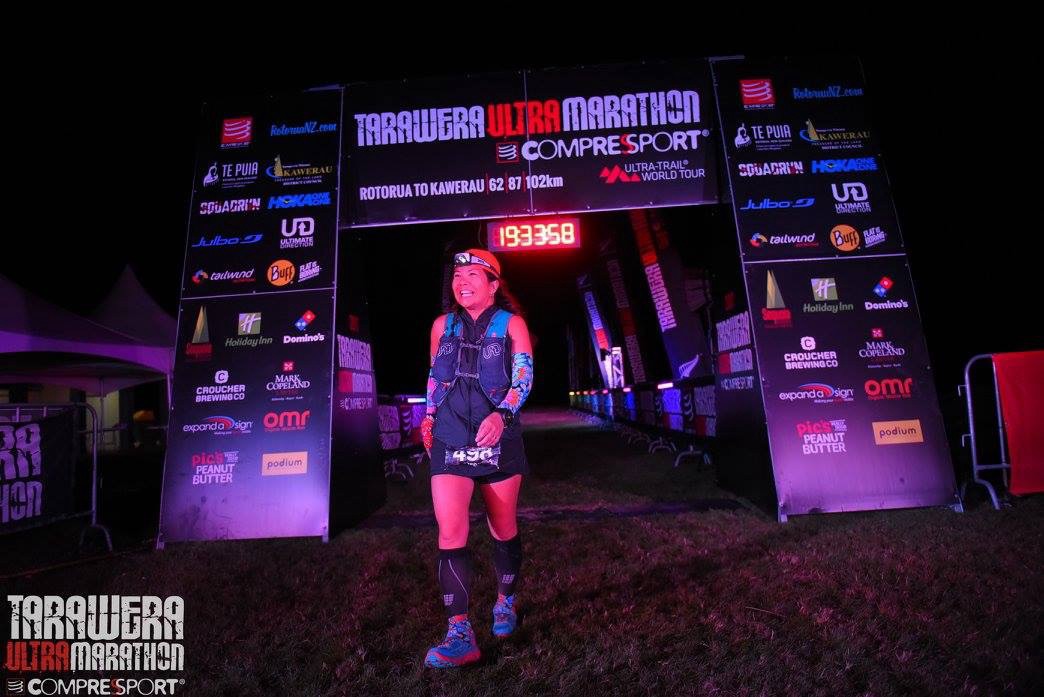
- Tarawera 102K, New Zealand, February 2017. This was my longest race to date. It had less than 9,000 ft of gain, but it took me 19:33:53 to finish.
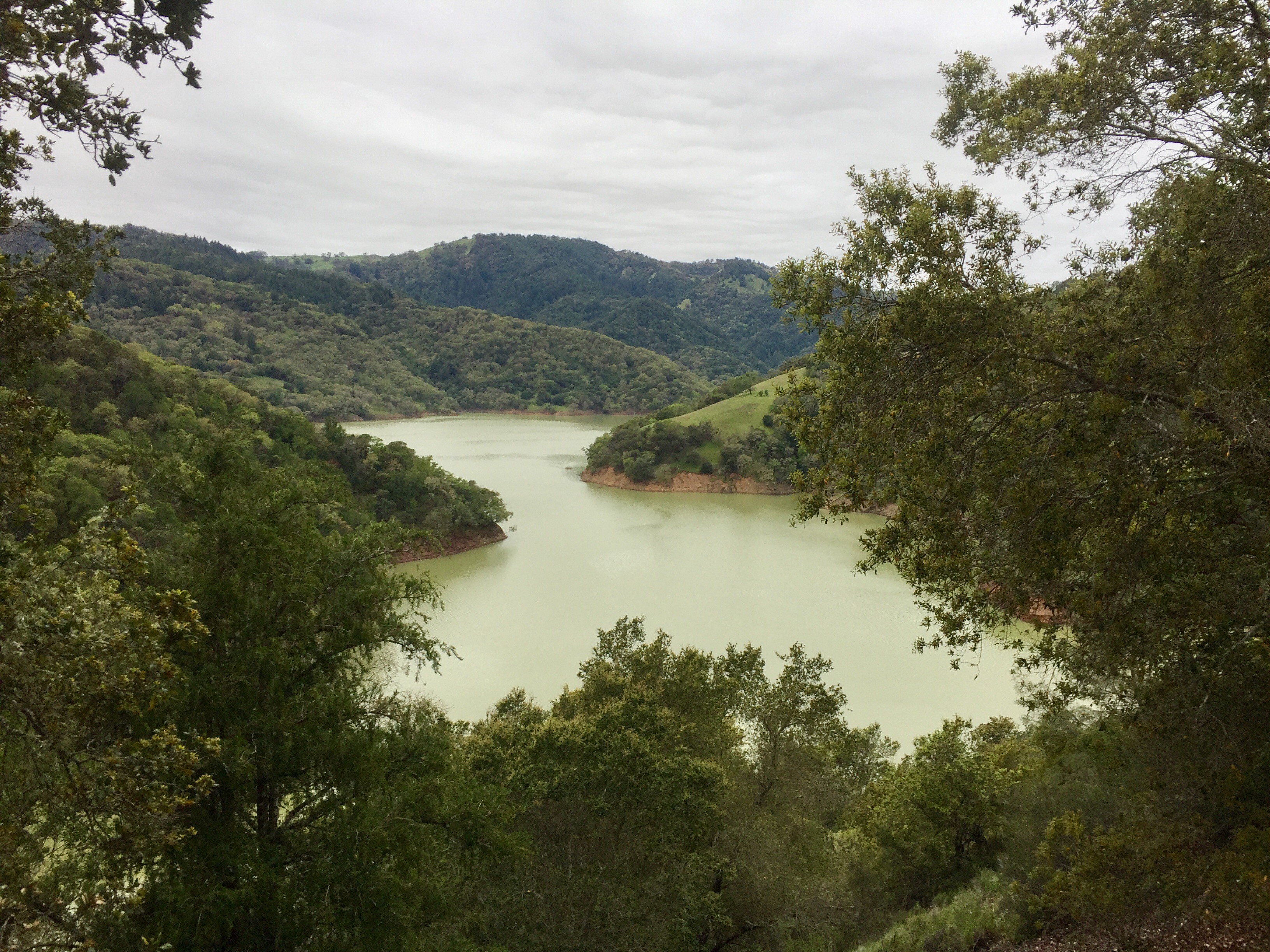
- Lake Sonoma 50M, California, April 2017. This was my second race at this distance. It featured relentless rolling hills with over 10,000 ft of gain. I finished in 13:22:25.
Training for these races gave me a solid base as I started my training block for OCC in late April. I based it loosely on my typical 50K training plan, but with a few “tweaks”:
- Add a lot of vert and a lot of hiking. To take on 11,000 ft of elevation gain, I needed to get stronger and faster at climbing so I could make the cutoffs. In the 5 months prior to training for OCC, I averaged 16,000 ft of vert per month. In the 5 months leading up to OCC, I increased the monthly average to 23,000 ft. I did this mainly by substituting one midweek run (typically on flat road) with hikes around the Lafayette Reservoir (5 miles, 1100 ft gain), and long weekend hikes and training runs with as much elevation gain as possible.
- Time on feet is critical. The cutoff for OCC is 14 hours, 30 minutes. Before OCC, the only other race I had done that took me 14+ hours to finish was Tarawera 102K. I needed to build my endurance. In July, I ran the Dirty Dozen 12 Hour, completing 50.78 miles. There wasn’t a lot of elevation gain, but it was 12 solid hours of moving.
- Practice on technical and steep trails — the rootier and rockier, the better. And for good measure, train on muddy, slippery trails! Some notable races and hikes that featured these were:
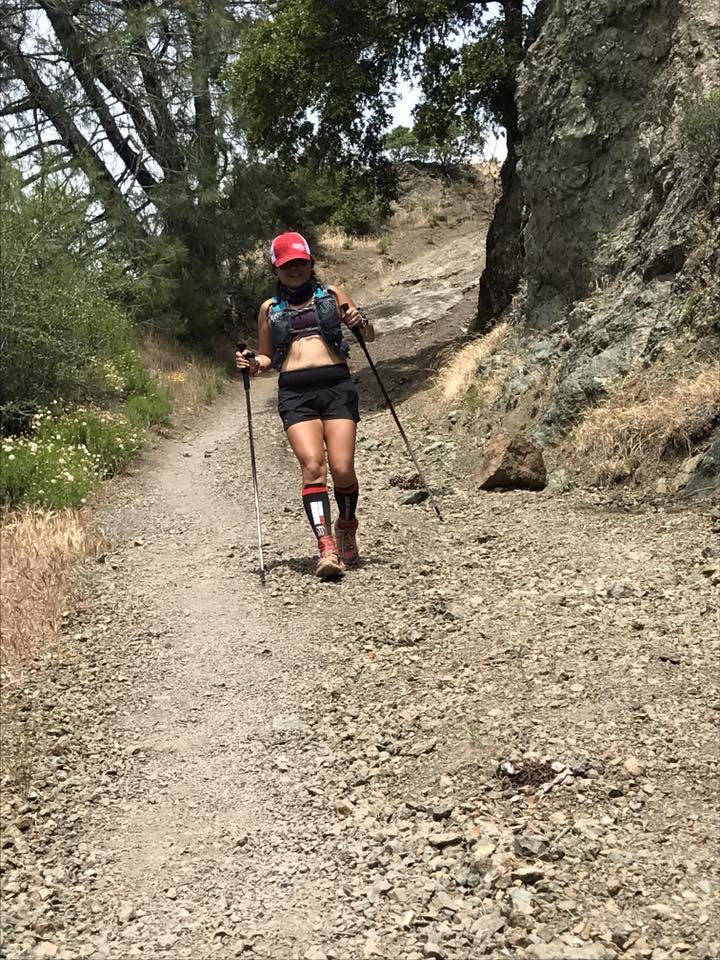
- Canyons Endurance Run 50K— the course is run on the historic Western States trail, with almost 9,000 ft of gain, including some steep climbs from El Dorado Creek to the Pump, and from the Swinging Bridge to Devil’s Thumb.
- Spartan Race Ultra Beast Hawaii — obstacle course race with 28 miles, 8,000 ft of gain, and 68 obstacles at Kualoa Ranch, Oahu. This race involved multiple long and steep climbs on very muddy trails in the jungle. In several places, I had to grab on to trees, branches, and rope to pull myself up or keep from falling.
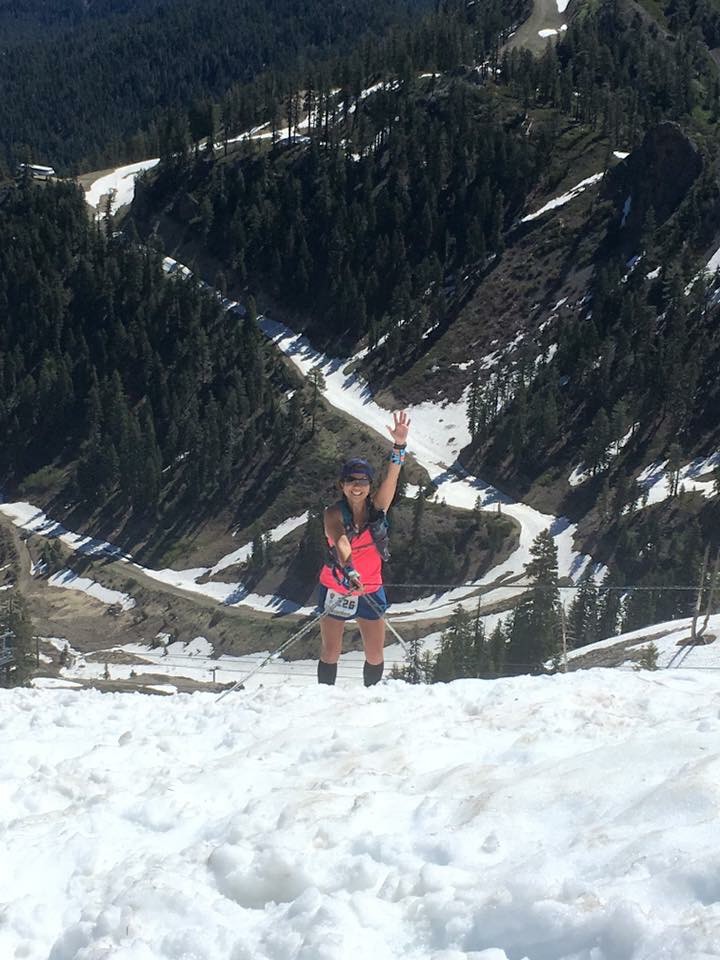
- Broken Arrow Skyrace 52K — this was my tune up race; a gauge of my readiness for OCC. It’s a skyrace patterned after European mountain races, consisting of two loops of the 26K course, over 10,000 ft of gain, at altitude ranging between 6000-9000 ft. It’s the closest thing to an Alpine race as you could get in Northern California. Due to the unusual winter this year, snow covered half the course in mid-June. The biggest and steepest climb was K-22. Unfortunately, I DNF’d this race (did not finish). I completed the first loop over 20 minutes past the cutoff and was not allowed to continue. It made me realize I had a lot of work to do to get ready for OCC.
- Mt. Diablo Five Peaks Run/Hike — 16-mile loop (5,000 ft gain) from Mitchell Canyon Staging Area in Clayton, CA that reaches all five peaks of Mt. Diablo: Twin Peaks, Eagle Peak, Mt. Diablo Summit, North Peak, and Mount Olympia. There are many sections with loose rock/scree, and the last quarter mile up North Peak is especially steep.
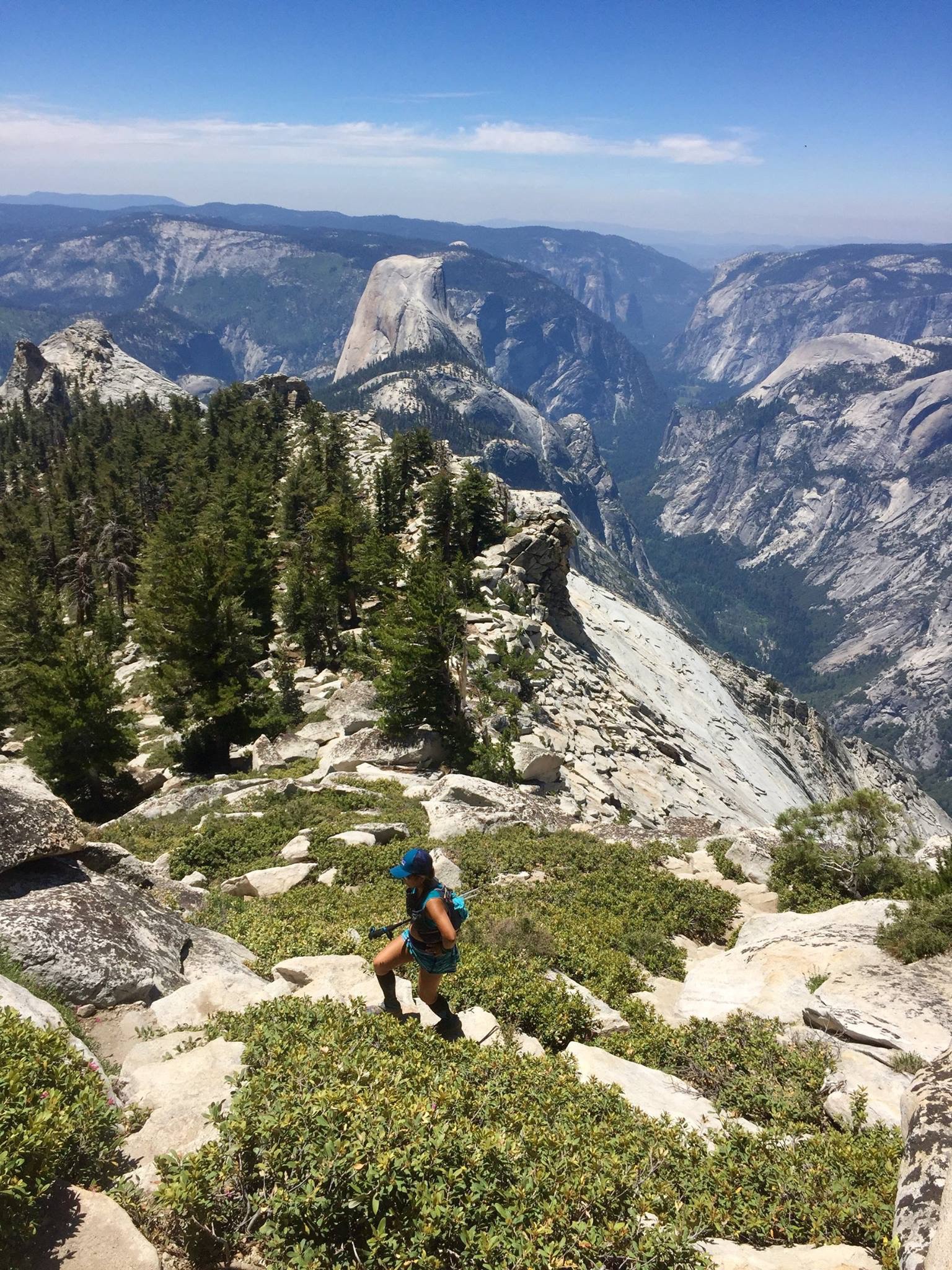
- Clouds Rest Run/Hike — 26-mile round-trip run/hike from Half Dome Village to Clouds Rest in Yosemite. Total gain was 6,000 ft, featuring technical and steep trails as you approach the summit.
- A couple other notable technical trails in the area are Alta Vista Trail in Pacifica, Fern Creek Trail on Mt. Tamalpais, and Training Hill in Auburn.
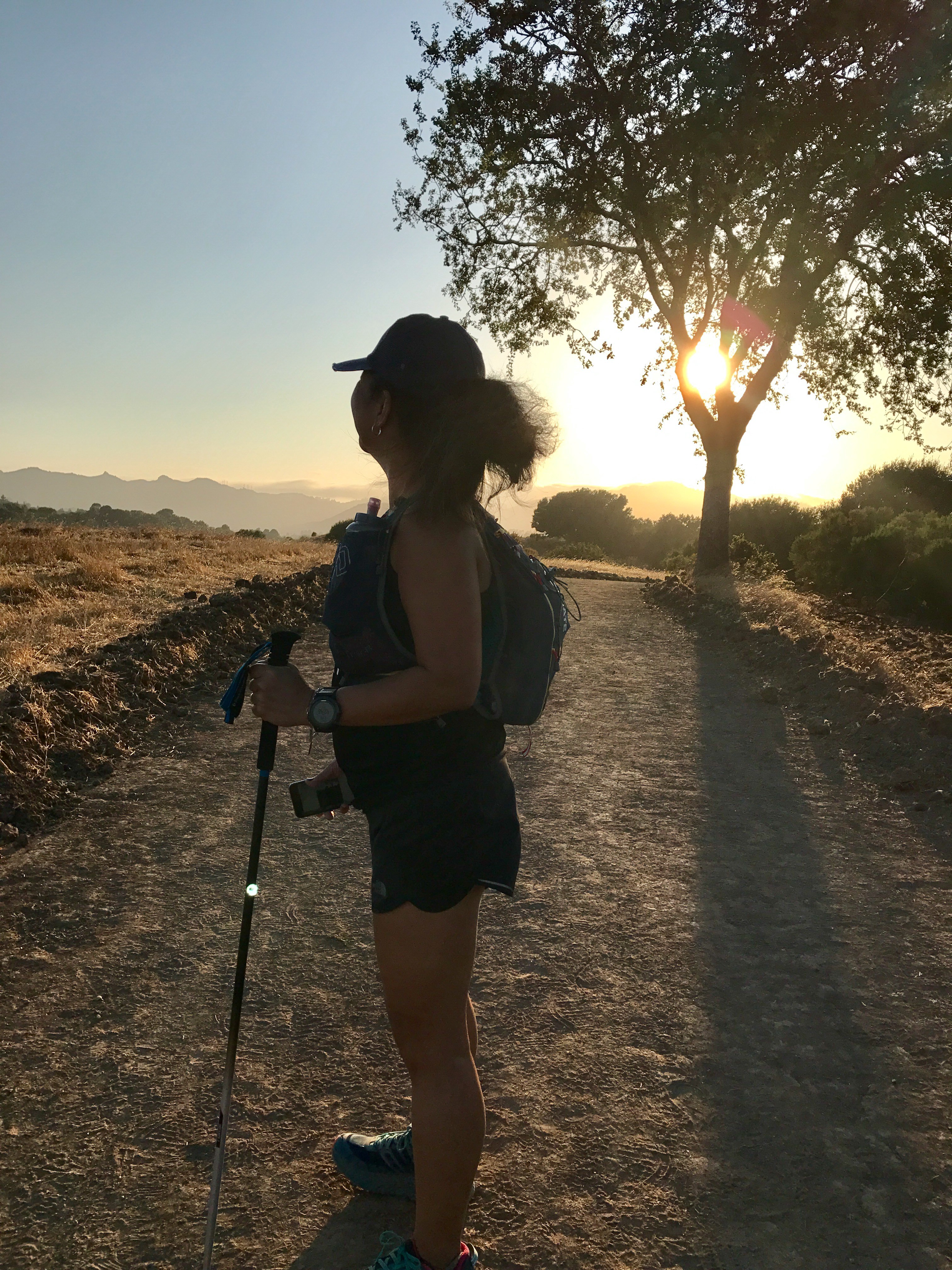
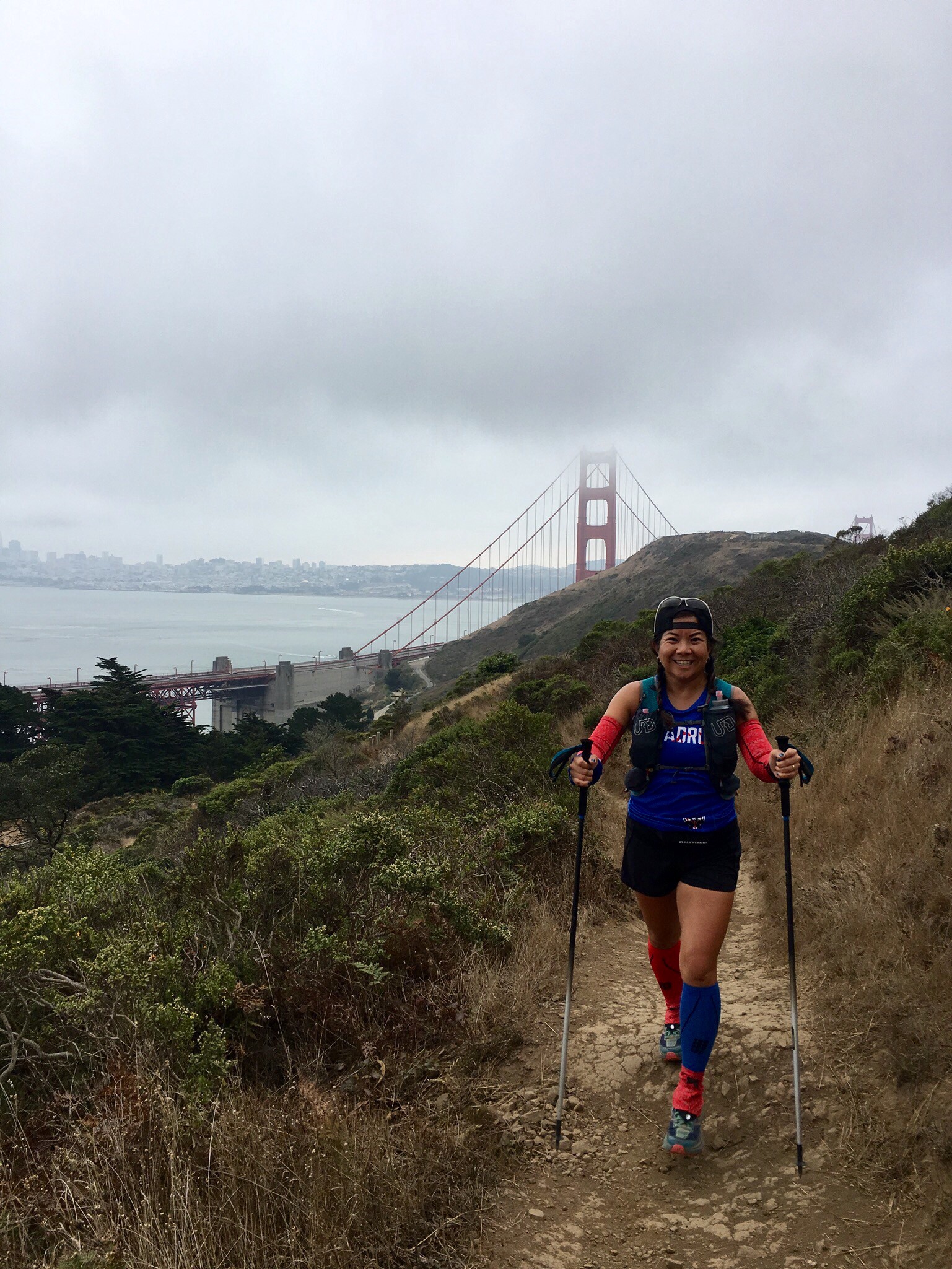
- Learn how to use trekking poles and practice, practice, practice! Trekking poles are not required at OCC. But they are highly recommended. I couldn’t imagine doing the race without them. I used the Black Diamond aluminum trekking poles that fold into three segments. You could put them away in your pack if you don’t need them. Used correctly, it will make climbing so much easier and help you keep your balance on muddy and steep descents. I had to watch YouTube videos on the proper use of trekking poles.
- Practice running with your full pack. With all the mandatory gear, my full pack weighed about 10 lbs. I had a few long training runs with my full pack on. On shorter hikes, I used a 10-lb. weighted hiking vest.
- Be prepared for all kinds of weather. The weather can change dramatically during the race. It could be warm and sunny in the village, and cold and blustery on the summits. This year, it rained all day. In the months leading up to the race, I was doing a lot of heat training. But thanks to an unusually wet winter in the Bay Area, I got a lot of practice running in the rain.
This race was way outside my comfort zone. I was nervous and wasn’t sure if my preparation was enough. I had no choice but to trust in my training. And no matter what, I vowed to enjoy every moment of this amazing adventure!
Race week
We arrived in Vallorcine (10 miles from Chamonix) on Monday night, 8/28, three days prior to the race. I was accompanied by my friend, Raquel, my daughter, Katrina, and her friend, Rachel. I should clarify that OCC does not allow crew or pacers during the race. But they were my support system before, during, and after — for which I am very grateful. And I was thrilled to share this experience with them.
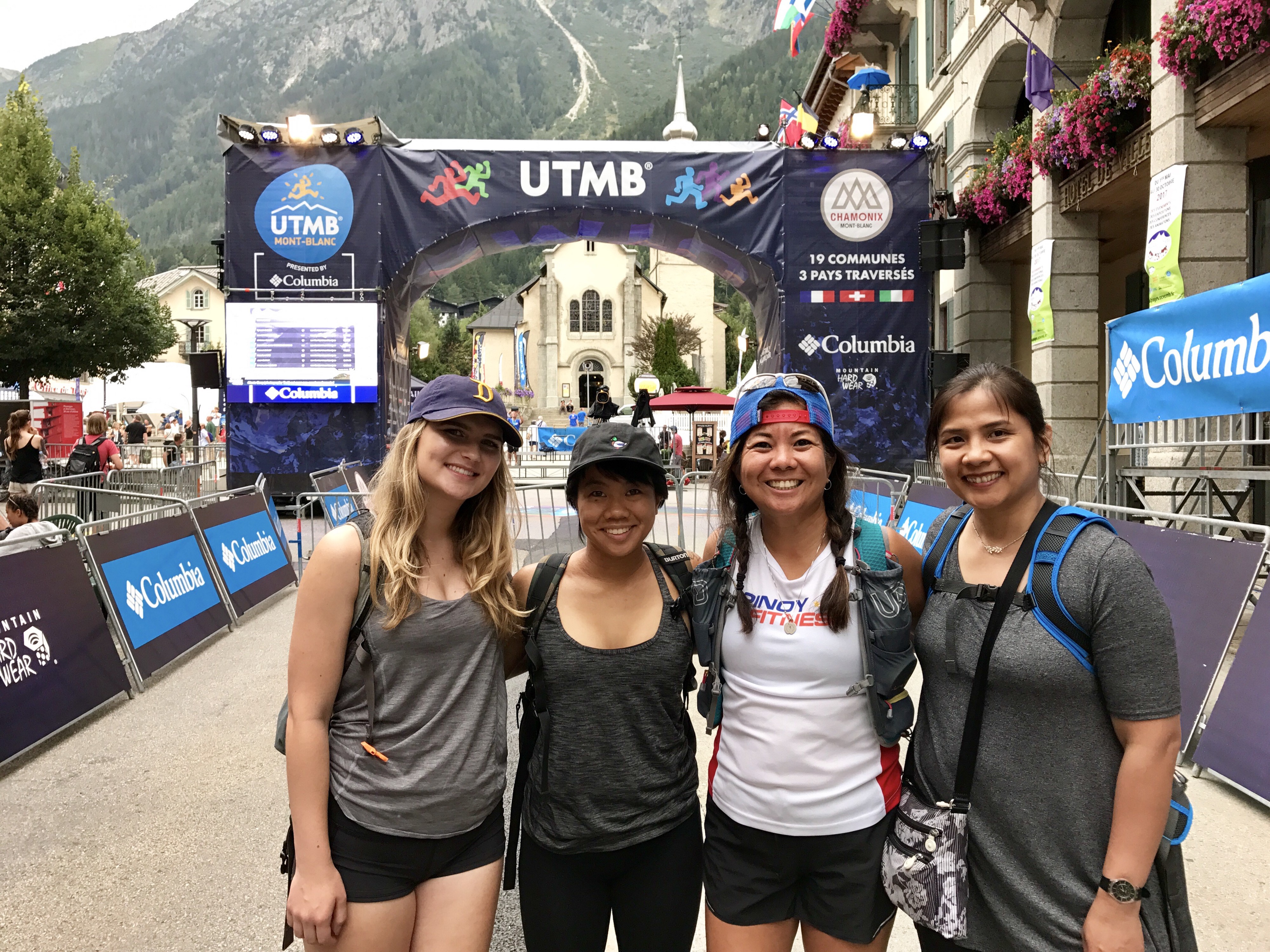
The next morning, Tuesday, 8/29, I went to Chamonix for a shakeout run and to check out the trails. I went to the Tourism Office at the plaza (near St. Michel Church) and bought a detailed map of the trails in the area. I followed the Petit Balcon Sud trail to Chalet de la Floria, then back to Chamonix. Chalet de la Floria is a charming restaurant right in the middle of the trail, with colorful outdoor umbrellas and vibrant flowers spilling out of window boxes. The only way to get there is by foot. I wish we had those back home!
The views of Mont Blanc and the Chamonix Valley were stunning. I’ve never seen mountains like those before — towering, steep, sharp, jagged, snow-capped. Mont Blanc is the highest mountain in the Alps, rising almost 16,000 ft above sea level. The closest I could compare it to are the Colorado Rockies. I later learned that the last section I ran was part of the OCC course. Awesome!
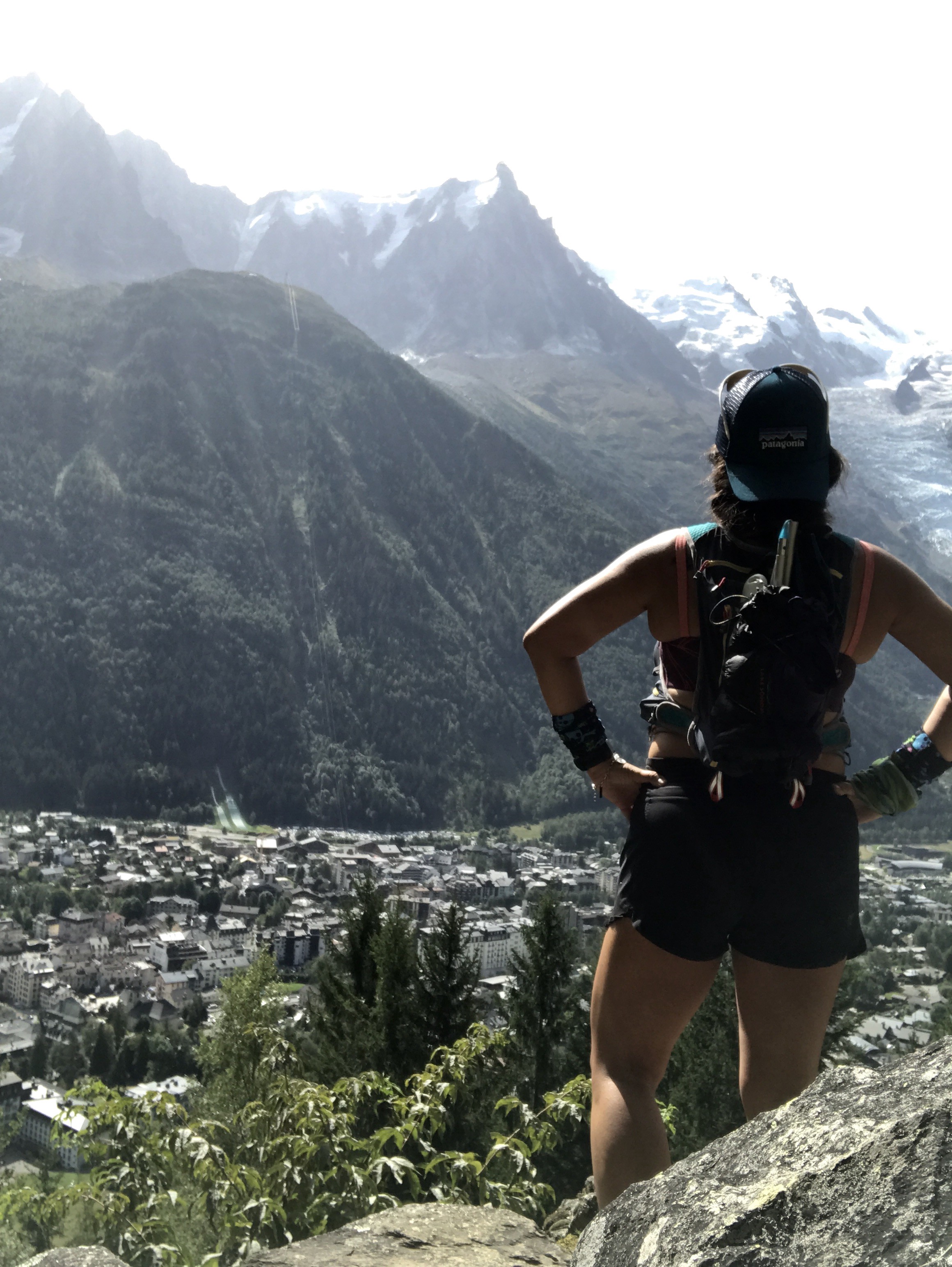
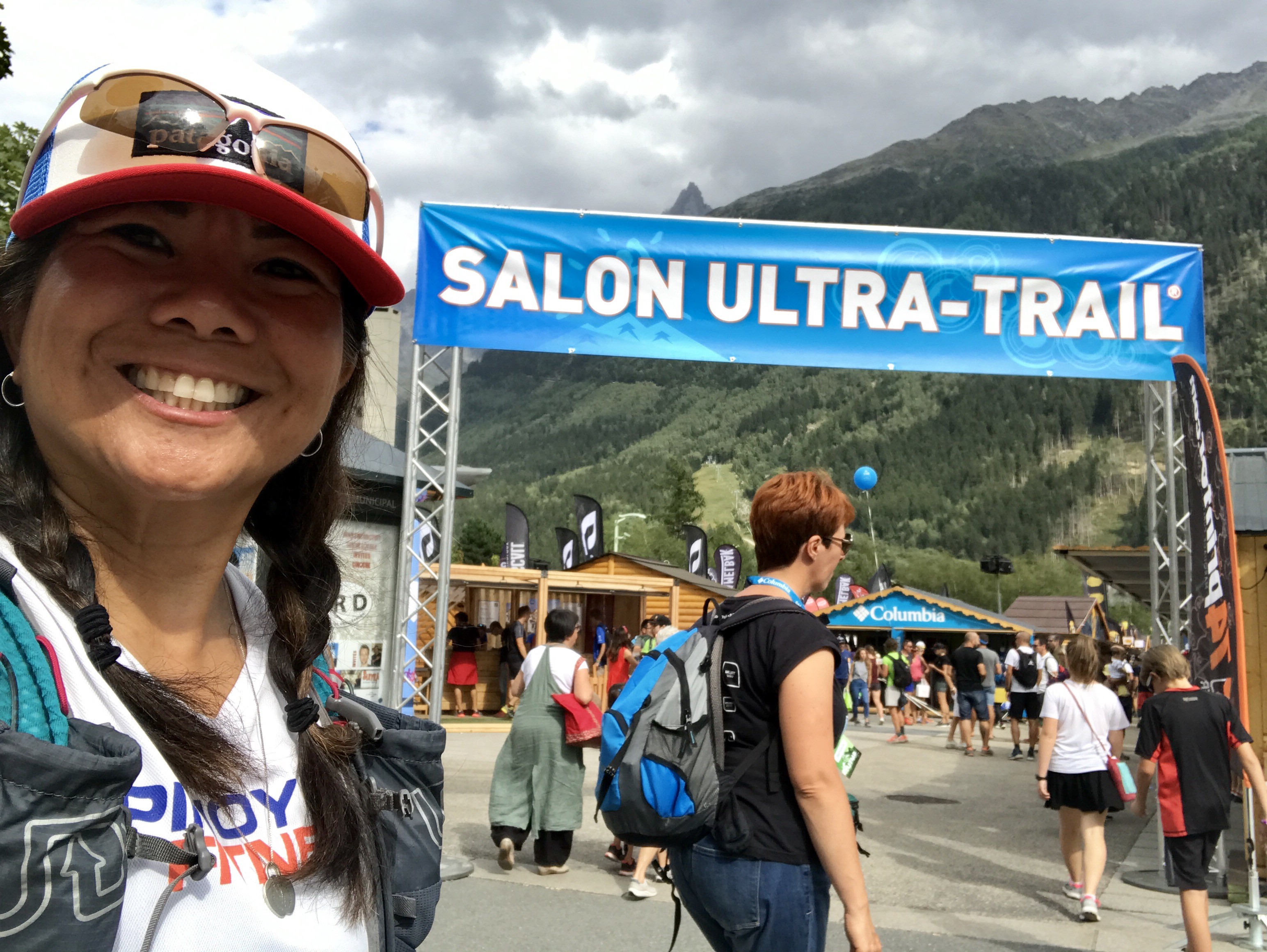
Bib pick up and Salon Ultra-Trail
On Wednesday morning, 8/30, we headed to Chamonix to pick up my race bib and check out the expo. I had to bring my pack with all the required gear.
Bib pick-up was at the Richard Bozon Sports Complex. There was a long line coming out of the building, but it was moving steadily. Soon after getting in line, I recognized elite ultrarunner and Hoka One One athlete Tim Tollefson line up a couple of spots behind me. I introduced myself and asked if I could stand with him — he said sure. We spent the next 20 minutes or so chatting as we waited for our turn. He was easy to talk to and very humble, considering he placed 2nd overall at the 2015 CCC (his first 100K race) and 3rd at the 2016 UTMB (his first 100M race). And SPOILER ALERT! He placed 3rd overall again at this year’s UTMB against a stacked field! I was over-the-moon thrilled to have this one-on-one opportunity with such a great athlete.
Once inside the building, we were given a checklist and a tray and were asked to put four things on the tray:
- mobile phone with option enabling the use in France, Switzerland, and Italy
- jacket with hood and made with a waterproof and breathable membrane which will withstand the bad weather in the mountains (I used the Ultimate Direction Women’s Ultra Jacket)
- whistle (attached to my Ultimate Direction Adventure Vesta pack)
- survival blanket 1.40m X 2m minimum (I used a SOL emergency bivy)
The volunteers inspected my items, signed the checklist, handed me my bib, and tagged my pack with a timing chip. I moved down the line and got my tech short-sleeved race shirt and an OCC wrist band.
After that, I headed to the expo. The Salon Ultra-Trail was pretty sizable with rows of booths from different merchants, not unlike race expos for big road races. I recognized many brands; there were a few that were probably local to Europe. I made a beeline for the official UTMB merchandise booth and got a few souvenirs (of course!)
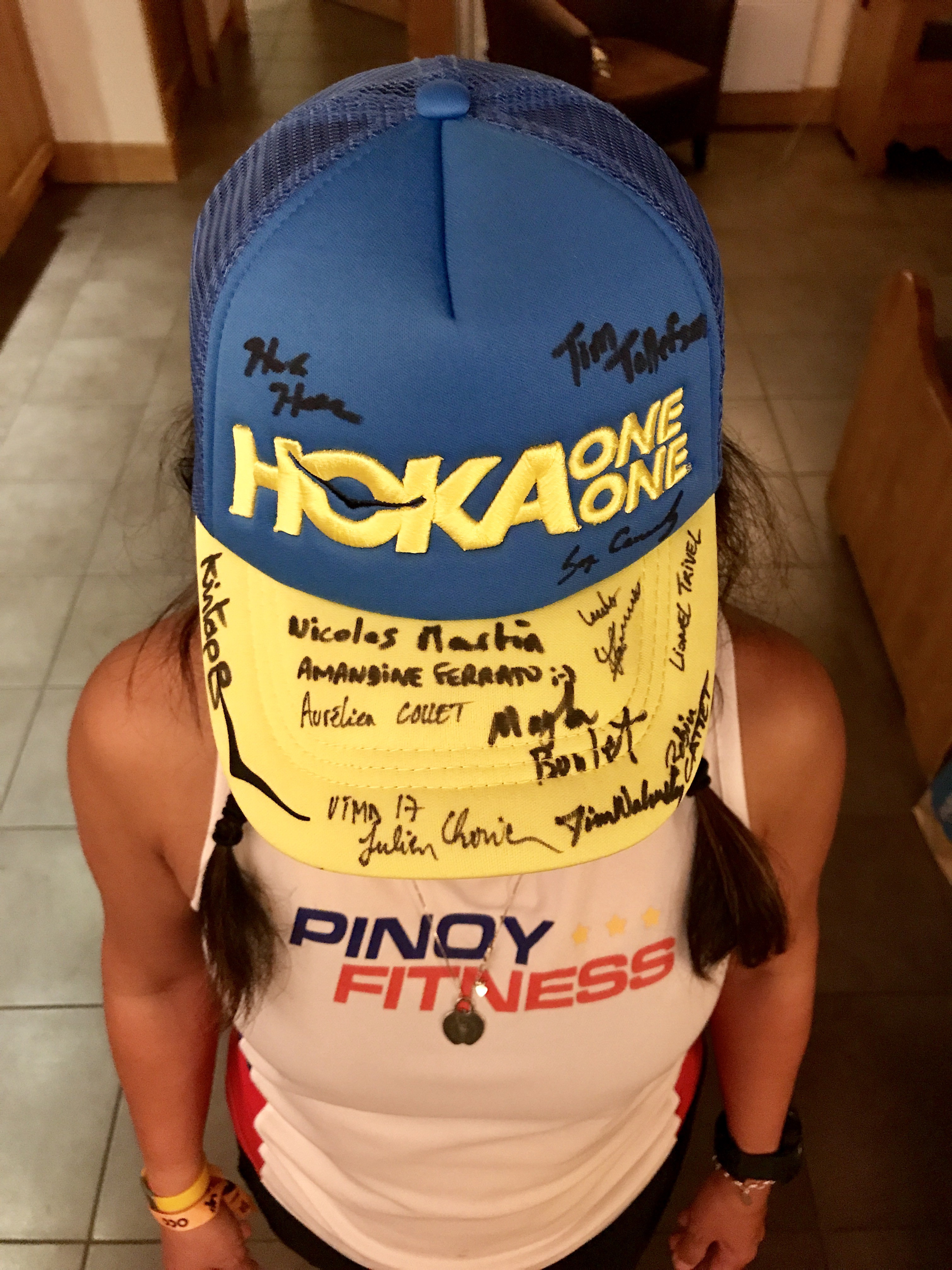
The Hoka One One booth caught my attention because it had two floors, and upstairs, I saw the American elite runners sponsored by Hoka. I got a trucker hat (gratis!) and had it signed by the French and American elite athletes, including Sage Canaday, Jim Walmsley, Hayden Hawks, Magdalena Boulet, and Tim Tollefson. That is perhaps my most prized souvenir from this race (next to the finisher’s vest).
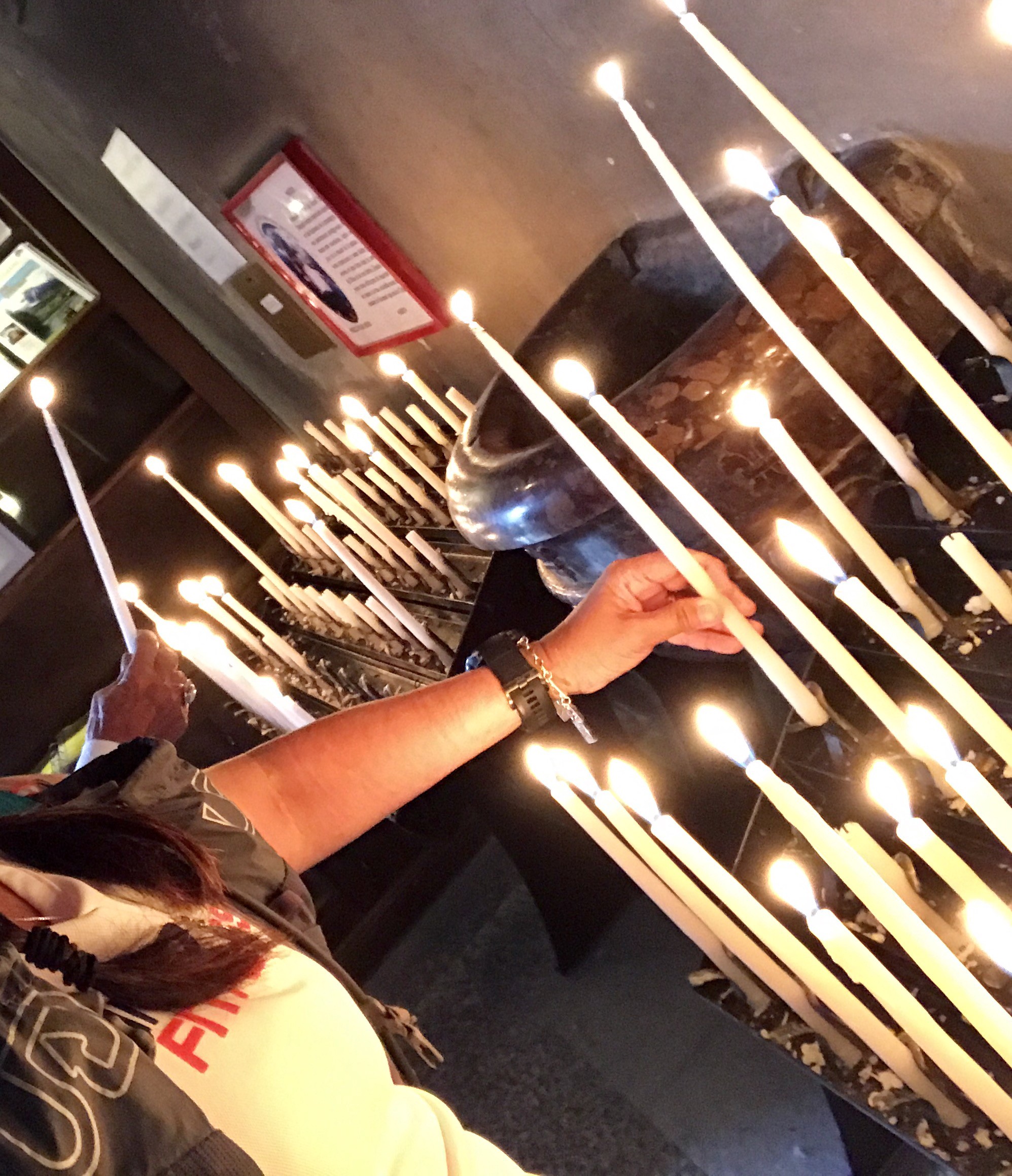
Before heading back to Vallorcine, I went inside St. Michel Church. It was dark, peaceful, and serene. I said a prayer then lit a candle. We stopped at the supermarket to buy food then headed back to the apartment to make dinner.
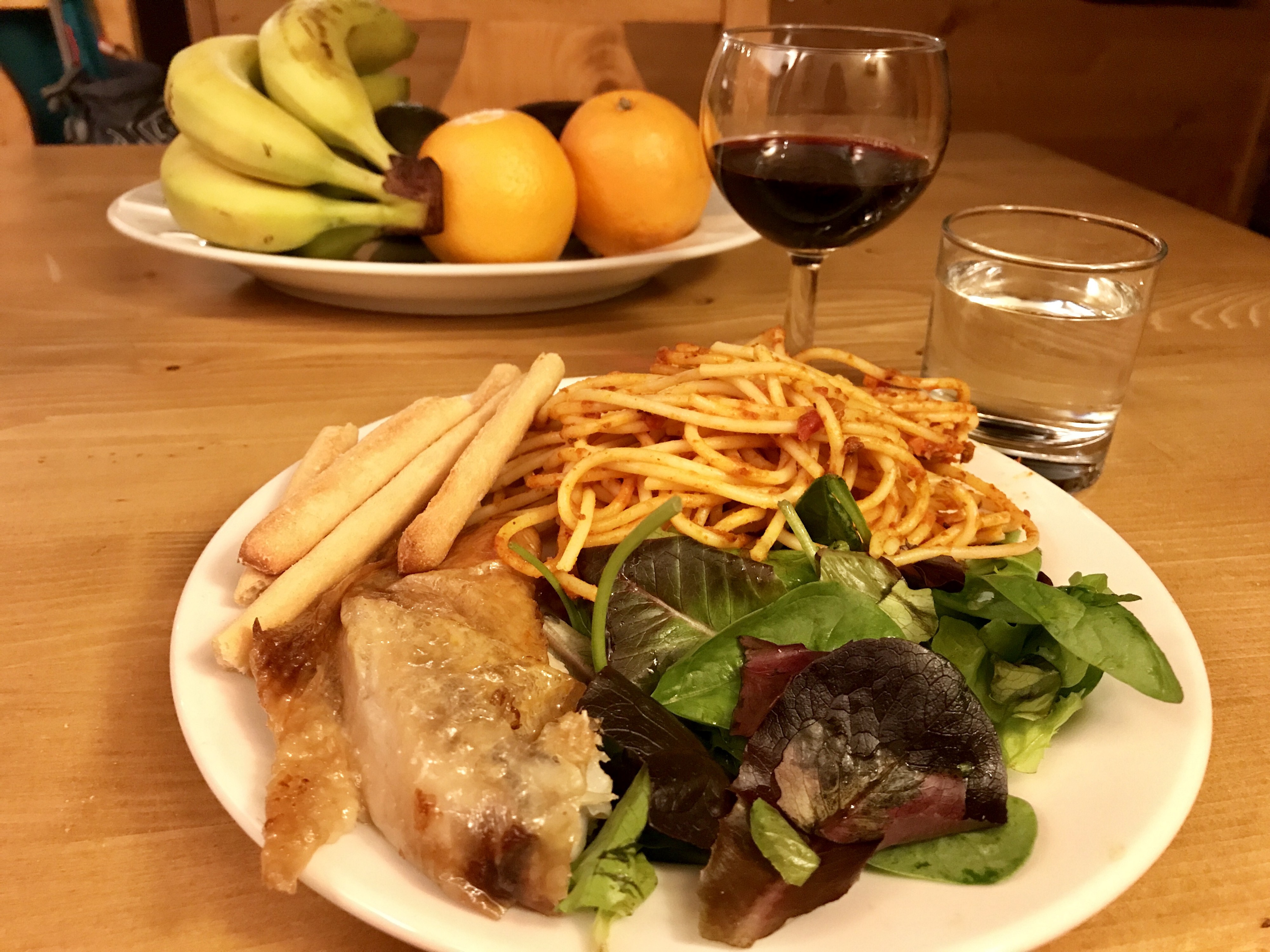
Before sleeping, I double-checked my hydration pack and laid out my clothes for the next day. At midnight, I set my alarm for 4:20 am and finally went to bed.
Race day
After getting dressed, I packed my fuel and hydration, including: bags of Tailwind, peanut butter sandwiches cut in quarters, orange slices, Chia Squeeze packs, grapes, Honey Stinger chews, and salt sticks.
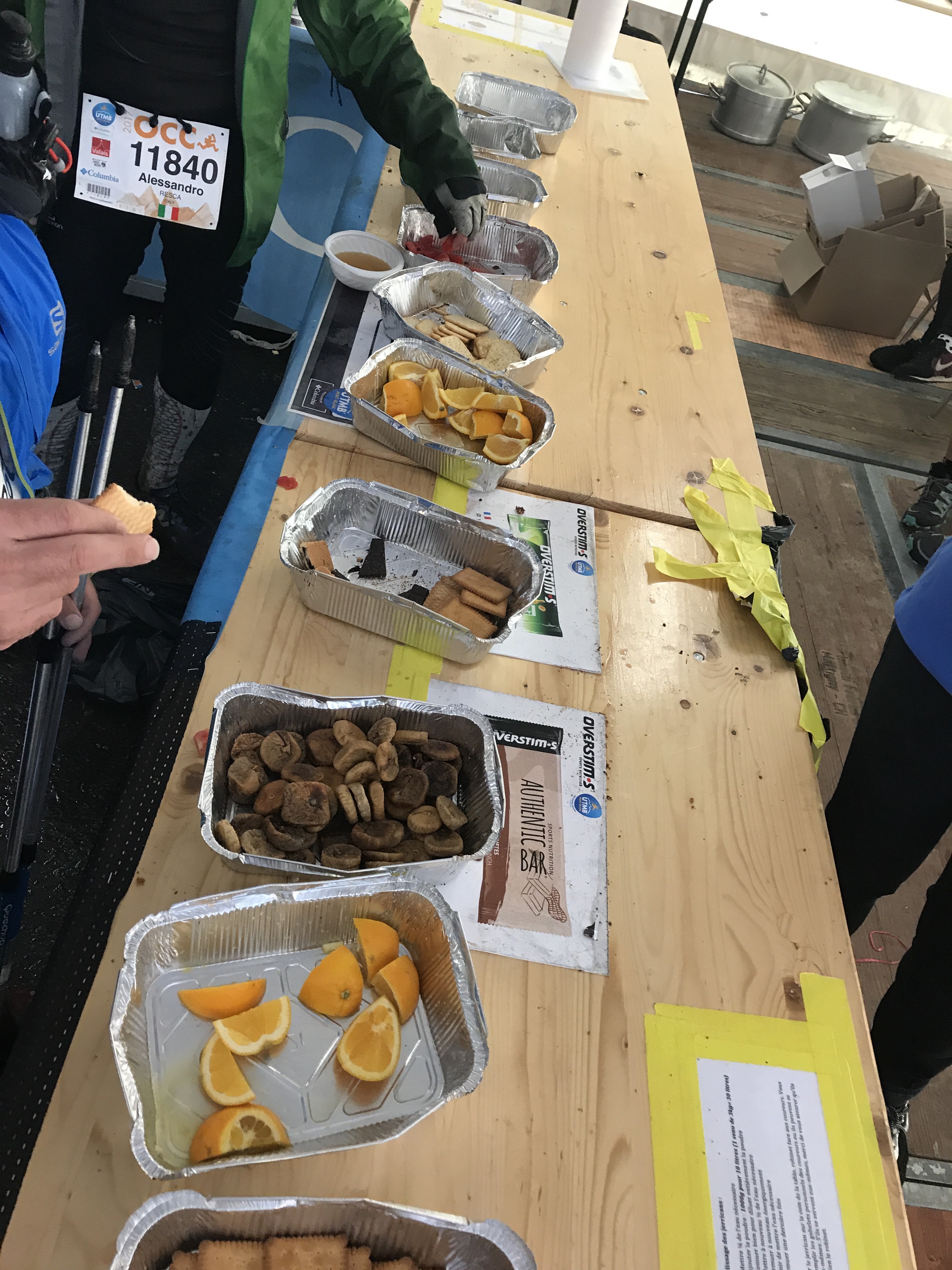
In hindsight, I only needed to bring food for the first 16 miles. Except for Champex-Lac, all the aid stations had food and drinks I was familiar with: watermelon, bananas, oranges, chicken soup with pasta noodles, Coke. There were other foods too— dried fruit, cakes, bread, cheese, salami — but because I didn’t train with them, I opted not to eat them. Note: for OCC, there are no drop bags other than at the start line, which you can pick up in Chamonix after you finish.
My pre-race breakfast consisted of a hard-boiled egg, peanut butter sandwich, and coffee. I packed a banana and water for the bus ride to Orsieres.
I walked to the Vallorcine train station parking lot behind our hotel to wait for the shuttle. The bus arrived at 6:00 am. The ride to Orsieres was about an hour long — I used the time to take a nap. At Orsieres, I got in line for the toilette. Then I saw my friend Charles! He’s the only other person from the Bay Area I know who was running the race. I’m so glad we finally caught up with each other!
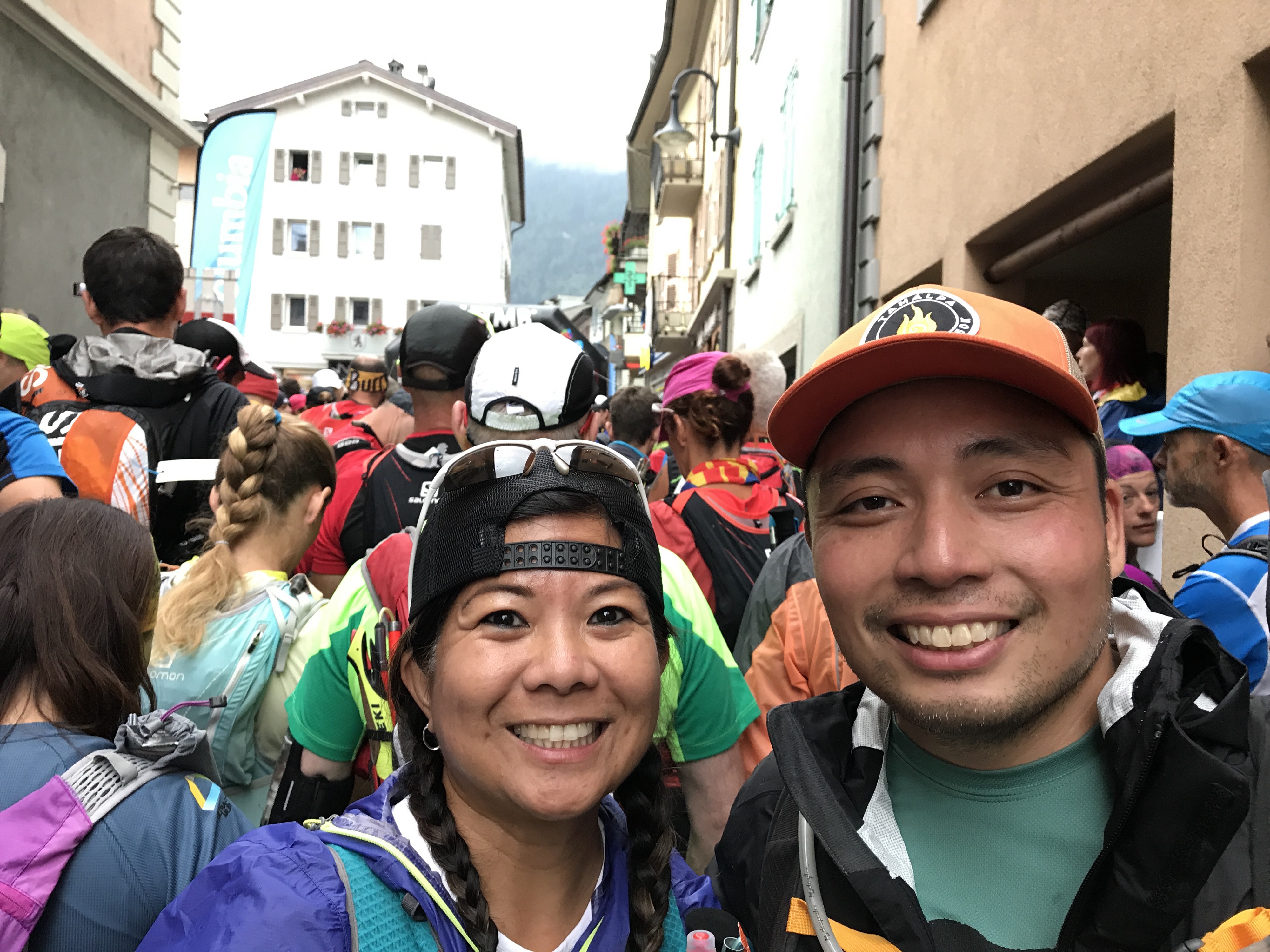
Over 1,500 runners toed the line and thousands of spectators lined the streets. We were on a narrow road with tall buildings on either side of us. Music was blaring. The announcer was counting down, and a drone flew overhead. The excitement was palpable. And around us we could hear different languages being spoken. Forecast showed 40% to 100% chance of rain all day. It started to drizzle as we waited at the start.
Orsieres to Champex-Lac (Mile 0 — Mile 6)
Charles and I wished each other good luck. At 8:14 am, we were off! I saw my friend Arlene on the sidelines, and we quickly hugged and squealed with delight. We ran through the streets of Orsieres. There were small kids lining the route and giving us high fives. People were ringing cowbells. It was a big celebration!
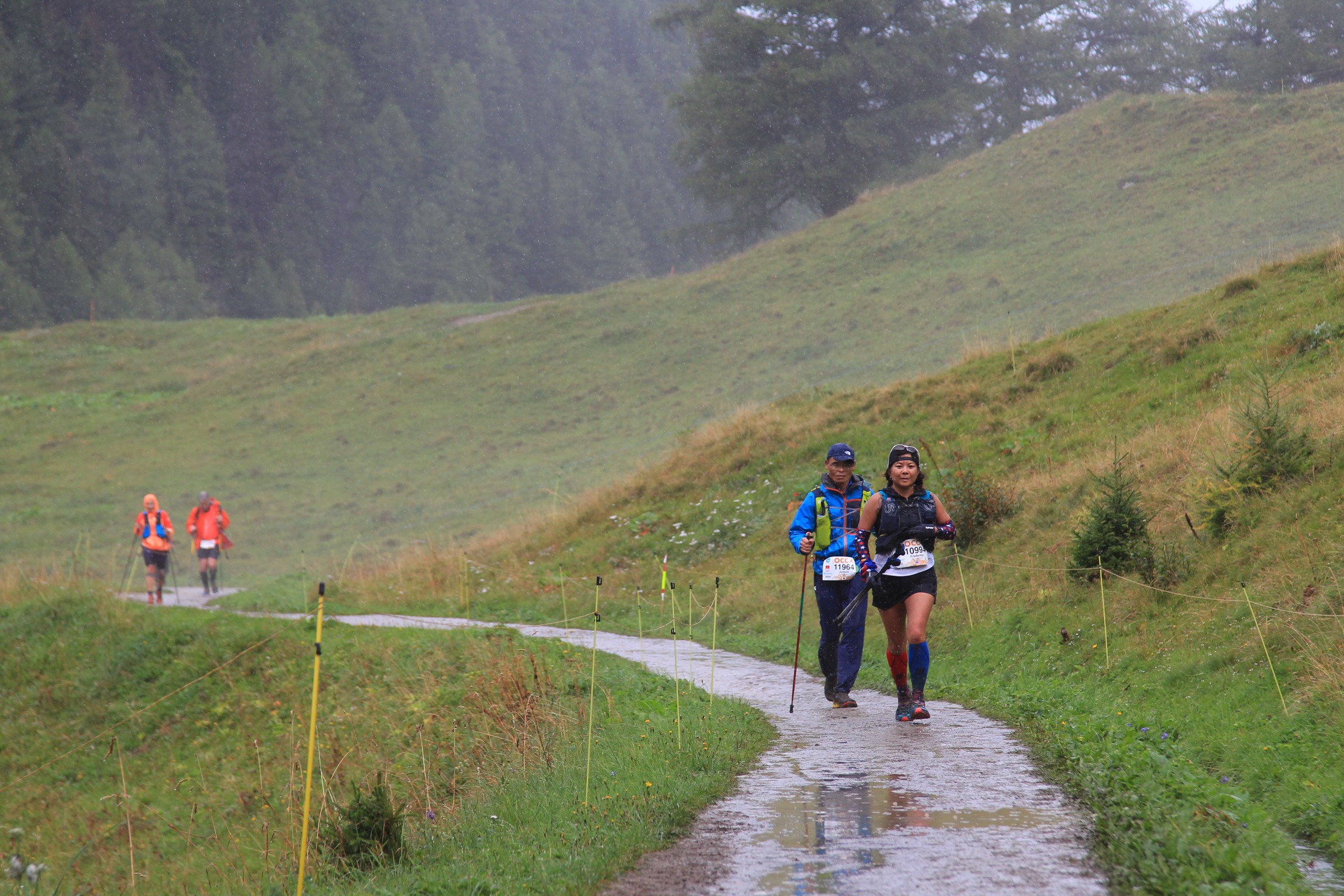
The first 3 miles had modest rollers that took us past a small village — Som-la-Proz. There were a lot of people out on the streets in the rain, cheering with their huge cowbells. The following 3 miles involved a 1,700-foot climb to Champex-Lac, the first aid station. About a mile from Champex-Lac, we hit a traffic jam on a steep single-track incline. Everyone was still in good spirits.
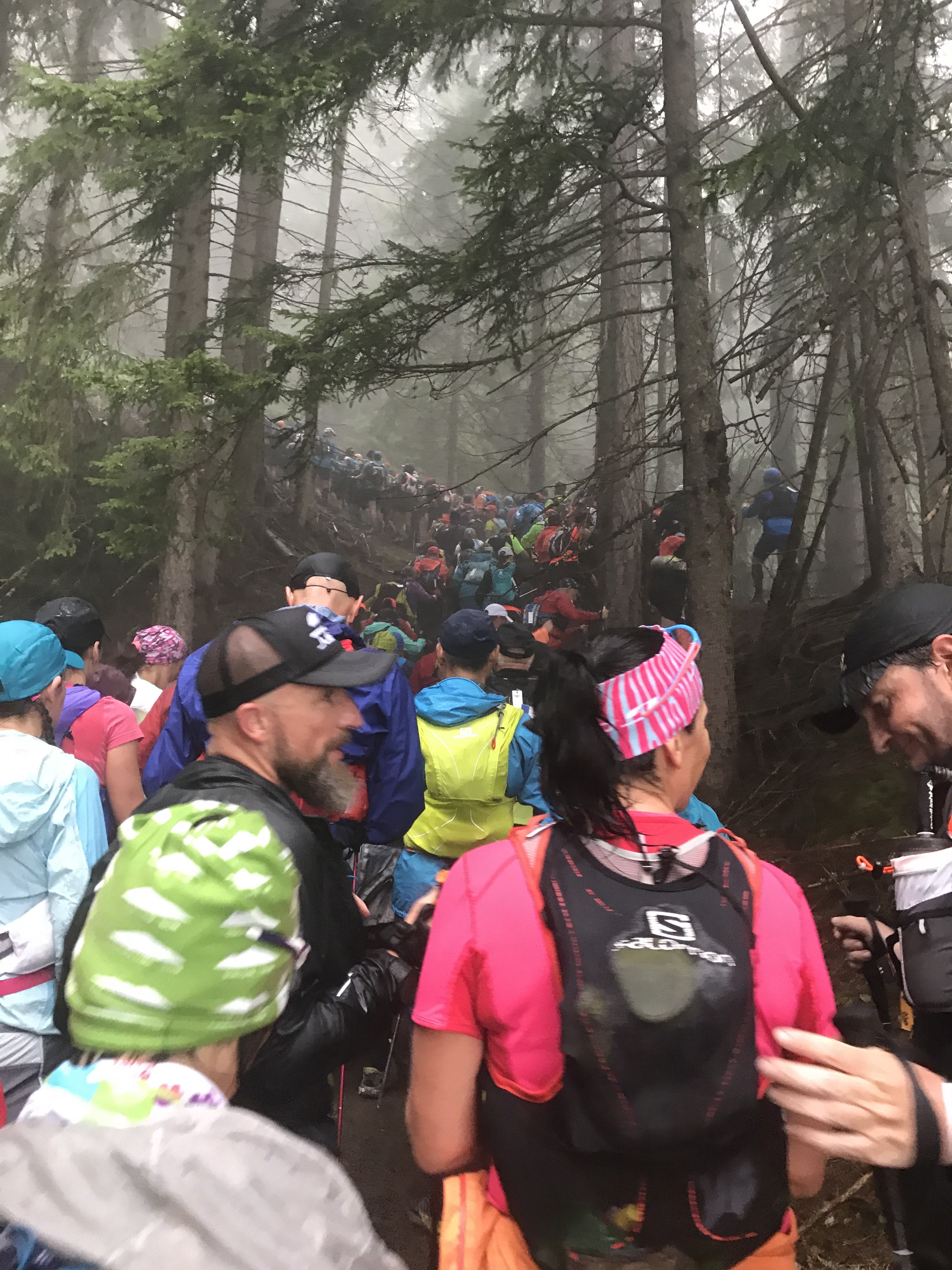
It was foggy when I arrived at Champex-Lac at 10:15 am. The aid stations are huge white tents with walls. It was dry and warm inside. There was Coke and water, but no food. I refueled with what I brought. They also had toilettes that flushed!
Champex-Lac to Trient (Mile 6 — Mile 16)
The next 3 miles were runnable. This is where I met Radu Restivan from Romania. He has a documentary series called “Discover the World Through its Marathons” and he was making one about OCC. He and I leapfrogged until Argentiere (Mile 27).
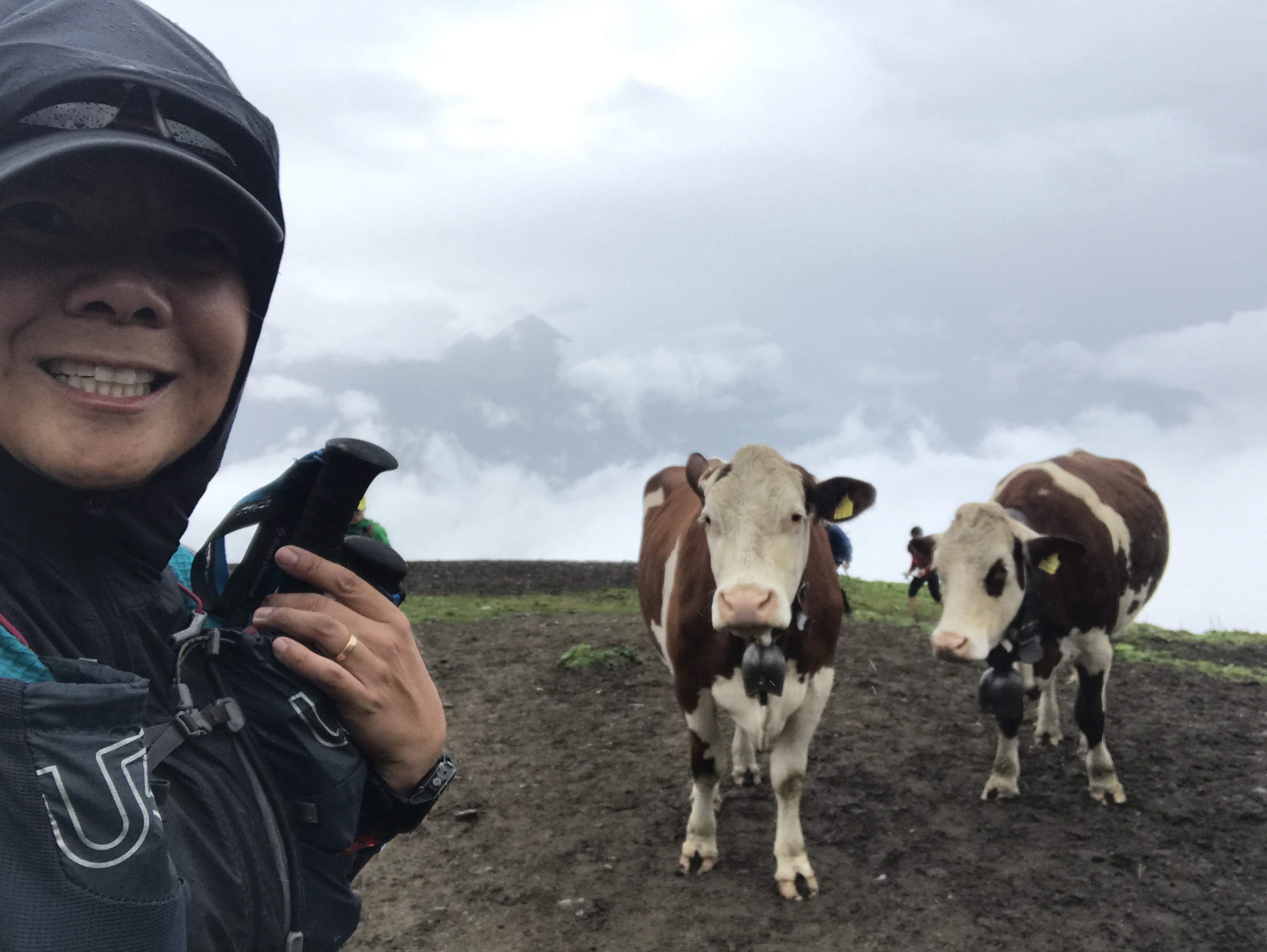
The next 4 miles was a brutal 2,500-foot climb to La Giete. This was the second highest point of the race at 6,200 ft. It reminded me of the ascent from Swinging Bridge to Devil’s Thumb at Canyons 50K, but much longer. Rain came down steadily. The wind picked up as we climbed, so I put on my running vest and gloves for warmth. I arrived at La Giete at 12:47 pm, feeling a little broken. It was a structure, like a stable, providing much-needed shelter from the rain and cold. Because this was not an aid station, there was no food — but it was staffed by medics and volunteers. I took a short break to eat a quarter of my peanut butter sandwich and a couple of orange slices — that cheered me up. Then off I went for the 3-mile descent to Trient.
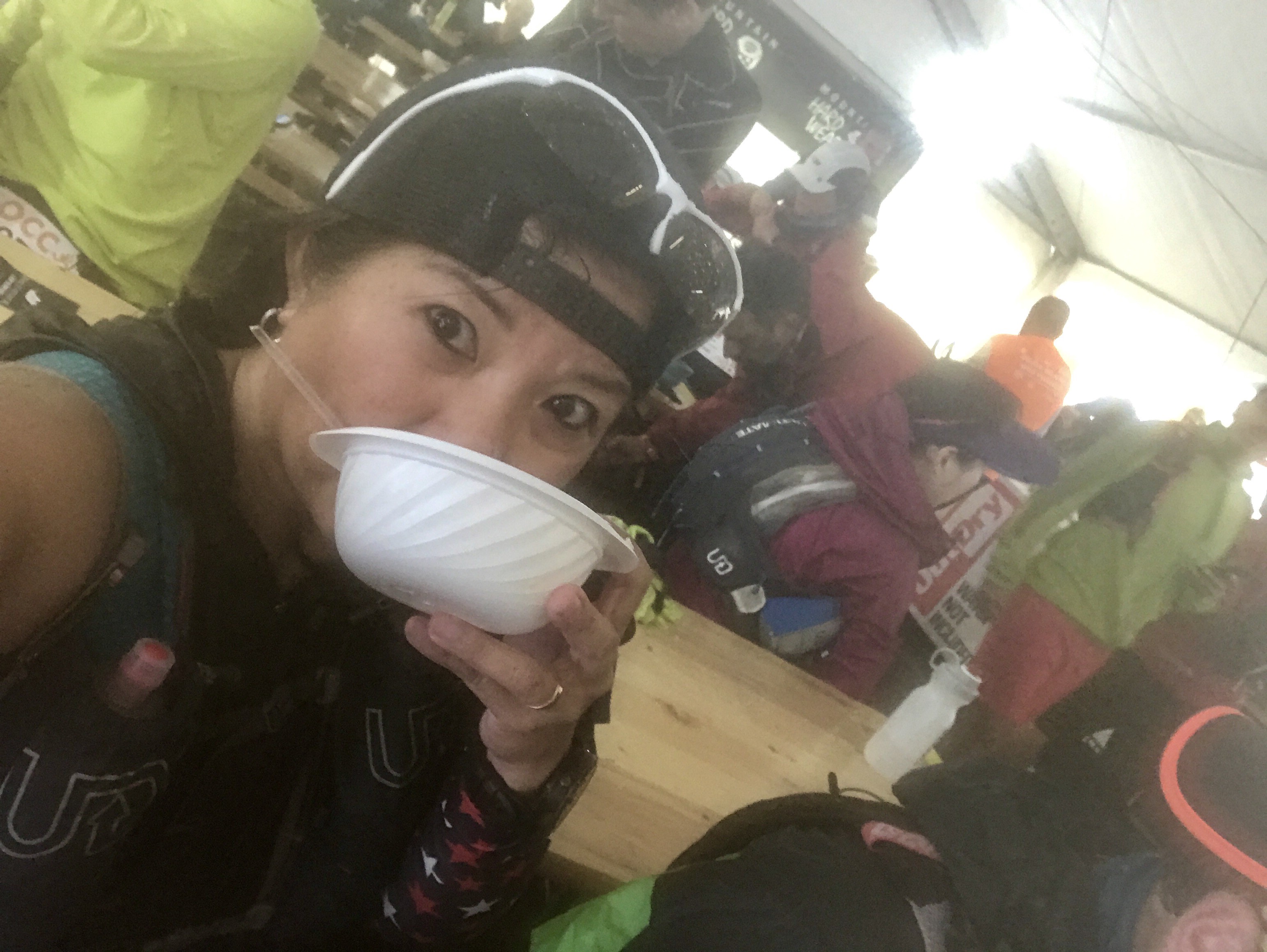
Trient had a 2:30 pm cutoff and I arrived at 1:42 pm. This was the second aid station, and the first one with food. I ate what I was familiar with: fresh fruits and chicken noodle soup. That soup was delicious and hit the spot! I drank Coke and refilled my water bottle. Then off I went to Catogne/Las Tseppes.
Trient to Vallorcine (Mile 16-Mile 22.5)
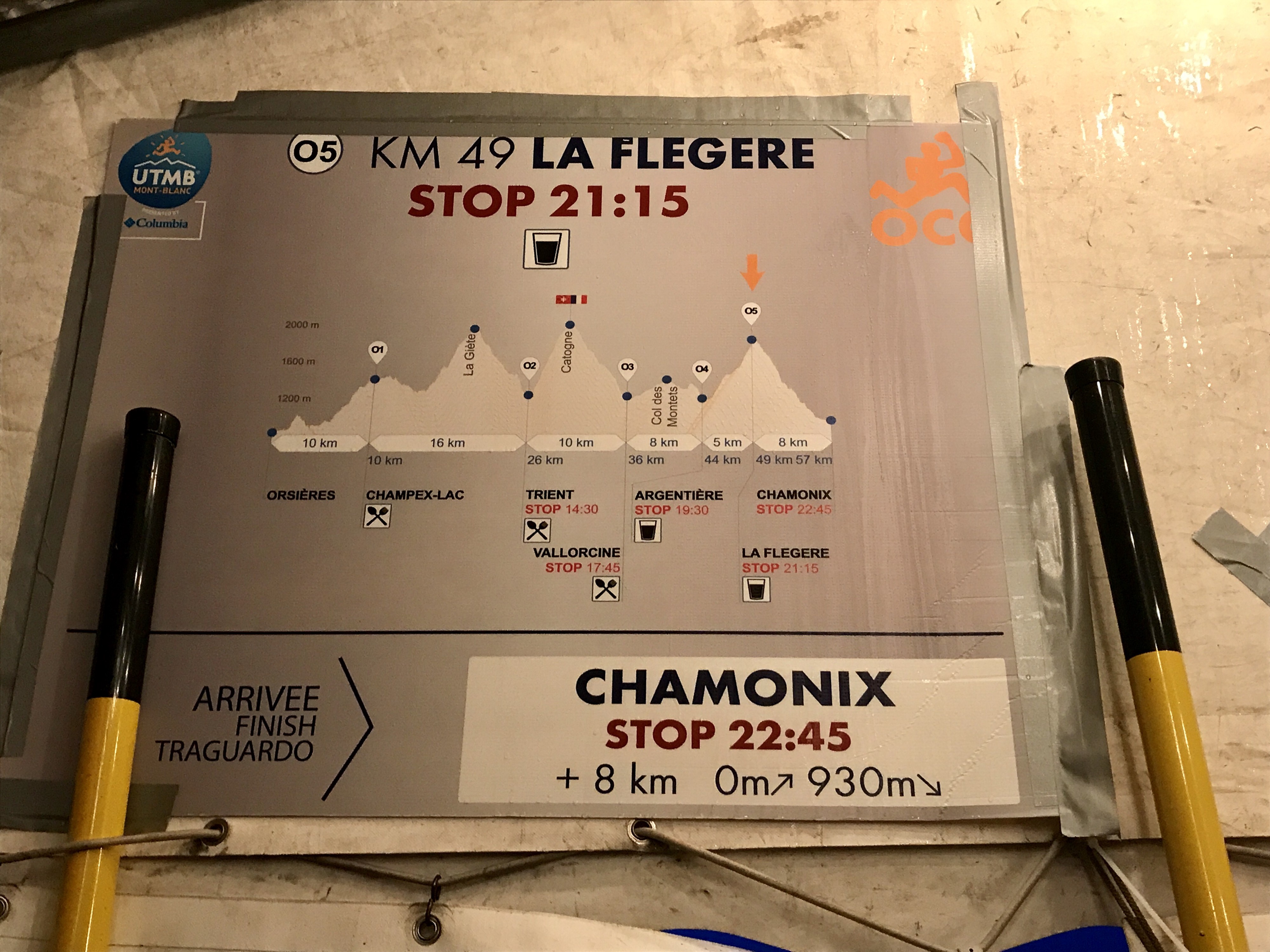
When I created my pace chart, I based it on a graph from the UTMB website, which showed the next cutoff to be Vallorcine at 3:45 pm. That meant I had 2 hours to get there. It was only 6.5 miles away — but half of it was a 2,700-foot climb to Las Tseppes, the highest point of the race at 6,775 ft. I was most worried about this particular cutoff because it was very tight.

I started at a good pace but hit a conga line soon after on single-track trails. We were going at a 30+ min/mile pace! It was frustrating and I started to get cranky because we would surely not make the cutoff at Vallorcine if we kept this pace. I knew I was using a lot of energy getting stressed out. So when a man made a move and passed me, I followed him. We slowly passed the hikers in front of us. Each surge would get me winded, and I had to slow down a bit to steady my heart rate and breathing. I kept making mental calculations about pace and distance, and the math just wouldn’t add up. Despite that, I kept moving. Near the summit, we passed a UTMB tent and they scanned the tag on my hydration pack.
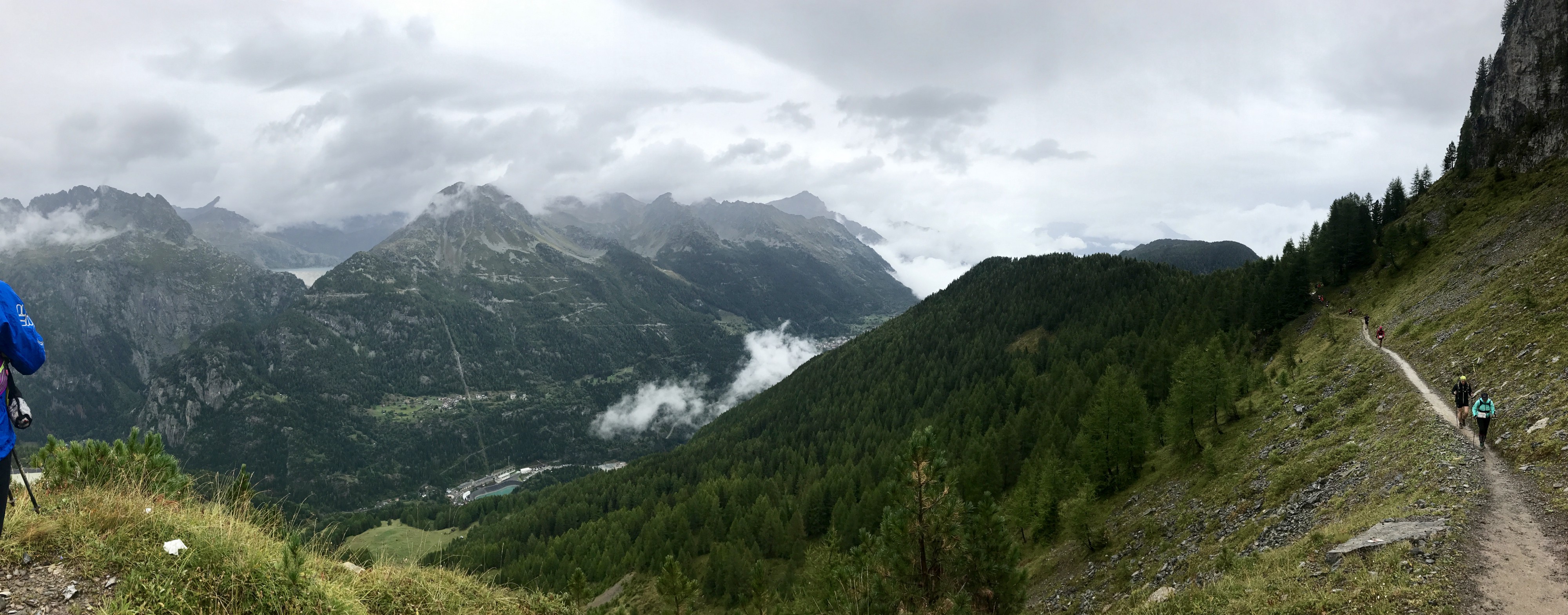
Las Tseppes/Catogne is near the border of Switzerland and France. It also signaled the start of the descent to Vallorcine. I reached Las Tseppes/Catogne at 3:05 pm, giving me only 40 minutes to cover the 3.5 miles to Vallorcine. If this were flat paved road, I could probably do it. But it was technical trail and with all the rain, it had become muddy and slippery. I prayed and asked God to give me the legs to run safely downhill.
As I descended, I passed a lot of people, some of whom were walking. I was confused — weren’t they worried about the cutoff? I vacillated between exhilaration that I was flying down the mountain and despair because my race was at risk of ending early. I’m so thankful that my Hoka Speedgoat 2s and trekking poles kept me upright despite the steep, slippery, technical trails. When I got to flatter terrain, I pushed myself to continue running, even though I thought I had already missed the cutoff.
I told myself, if this is where my race ends, then I want to have the best splits I could have at the end, and know that I gave it my all.
I arrived at Vallorcine at 4:16 pm. I could see my hotel as I ran toward the aid station. The thought occurred to me that if my race ended here, I could just walk over and get a nice hot bath. But the crowd was cheering loudly. Then I saw Katrina and Rachel. They were cheering for me too. I held back tears and said to them, “I think I got cut”. Katrina said, “no, no, no…just keep moving”. I was both very happy to see them and very confused!
I went inside the tent and asked the race official if I could continue running. I was hoping there was a mistake or mercy rule. From Vallorcine, it was just another 13 miles to Chamonix, and I knew I could gut it out. He replied, “of course!” It turns out the cutoff time at Vallorcine was 5:45 pm. I arrived over an hour early!!! A huge wave of relief washed over me. No wonder people I passed weren’t in a panic like I was. Lesson learned: Check and double check important details.
Vallorcine to Argentiere (M22.5-M27.4)
I regrouped and refueled at Vallorcine. The next cutoff was at Argentiere at 7:30 pm. I had 3 hours to cover 5 miles with only 833 ft of gain. Unfortunately, the descent to Vallorcine took a lot out of me; my quads were shot and I felt depleted. It’s a shame because this section was runnable. All that said, I decided to take it slowly and enjoy the view.
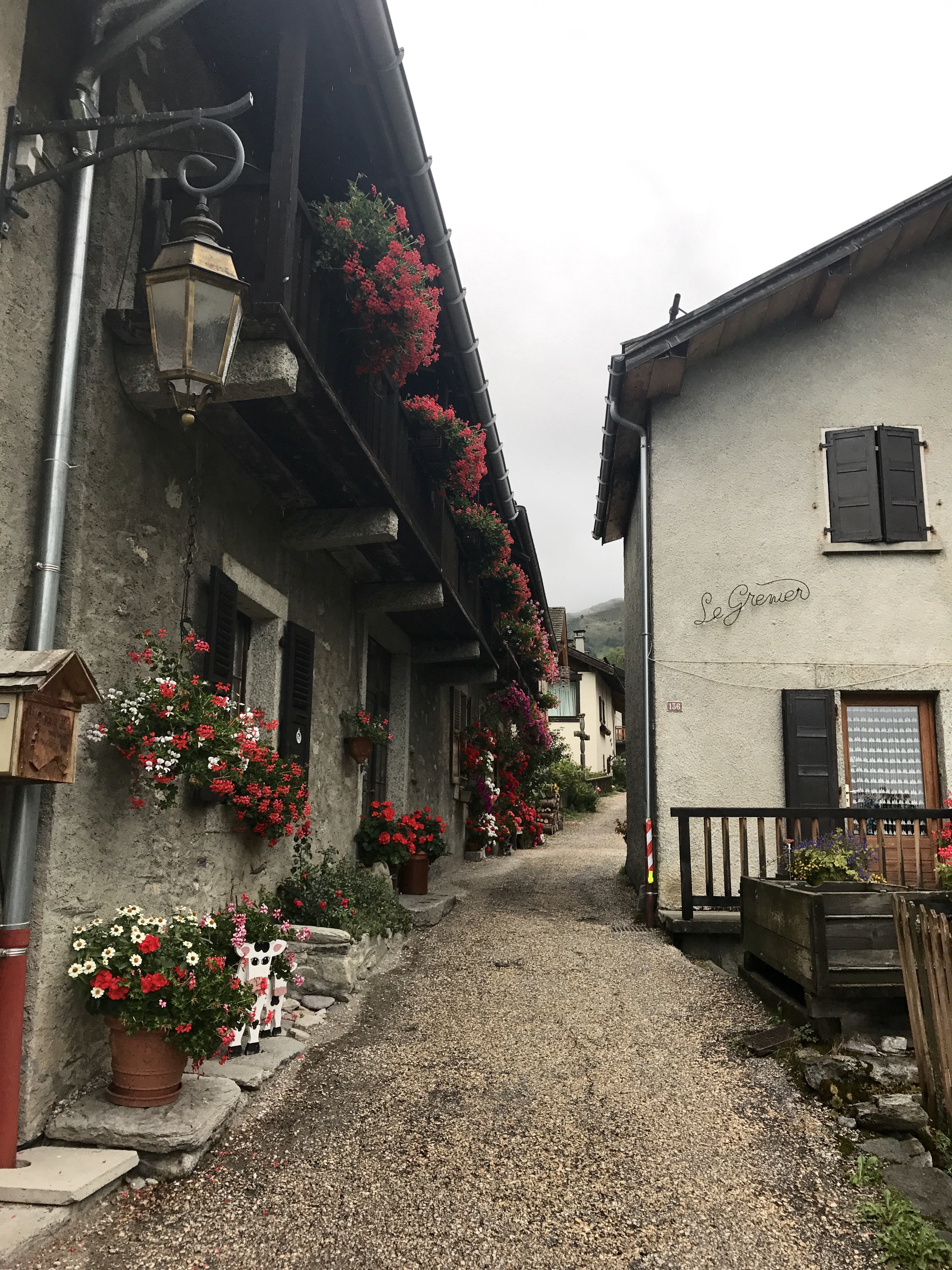
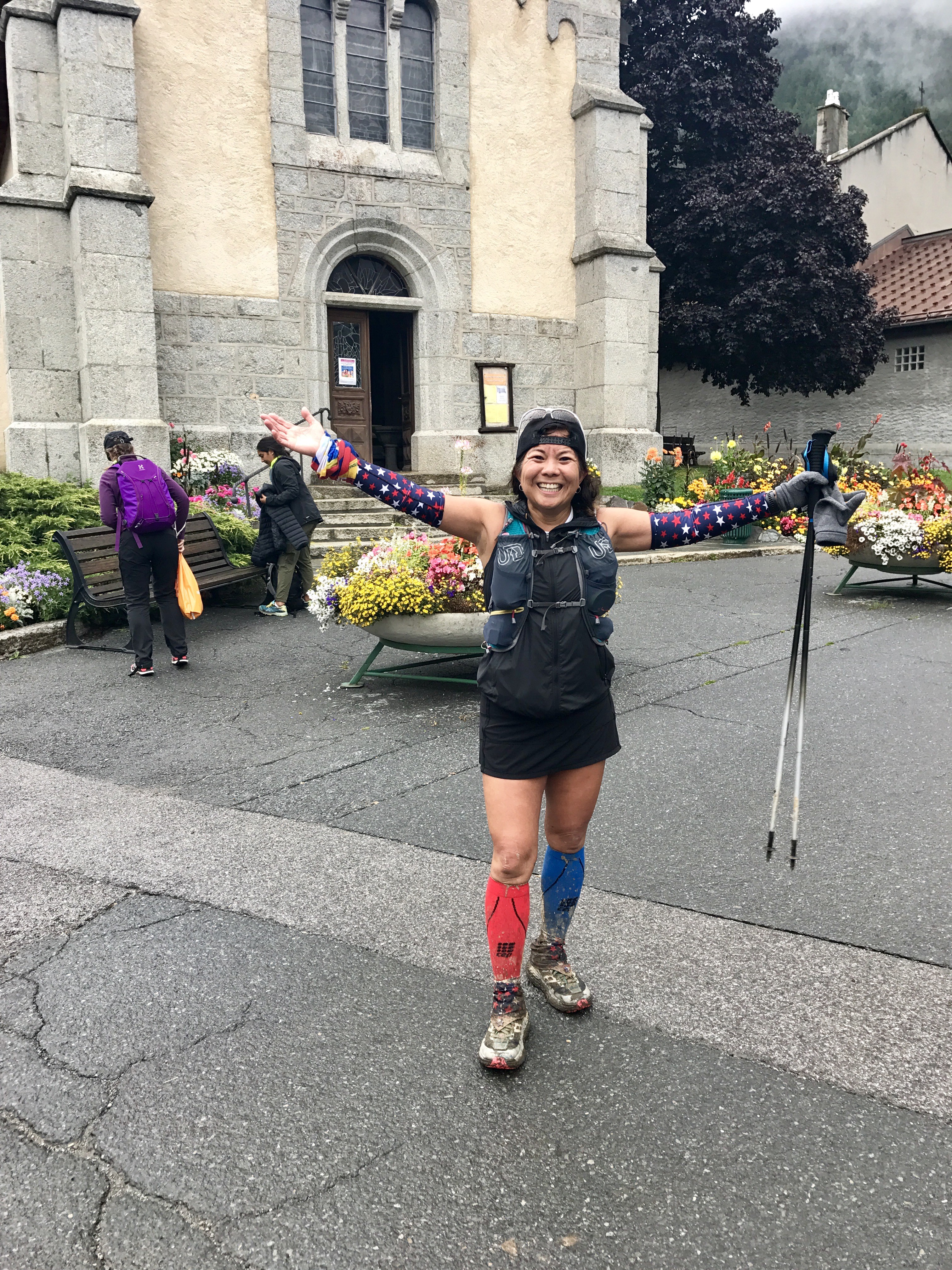
When my buddy Radu caught up to me on the flat section approaching Col des Montets, he encouraged me to run again. I learned from him that Col des Montets is a mountain pass that appeared in Tour de France in the ’60s and ’70s . I arrived at Argentiere at 6:25 pm and again loaded up on food and drinks.
Argentiere to La Flegere (M27.4-M30.1)
The next section to La Flegere was less than 3 miles, but it included 1,975 ft of gain. I found a hiking pace that was sustainable. This late in the race, I was surprised that I was never alone for long. I would follow another hiker’s steady cadence until I got distracted by the scenery and had to stop and take a picture or two. There were mushrooms, a bridge, and even a beautiful waterfall!
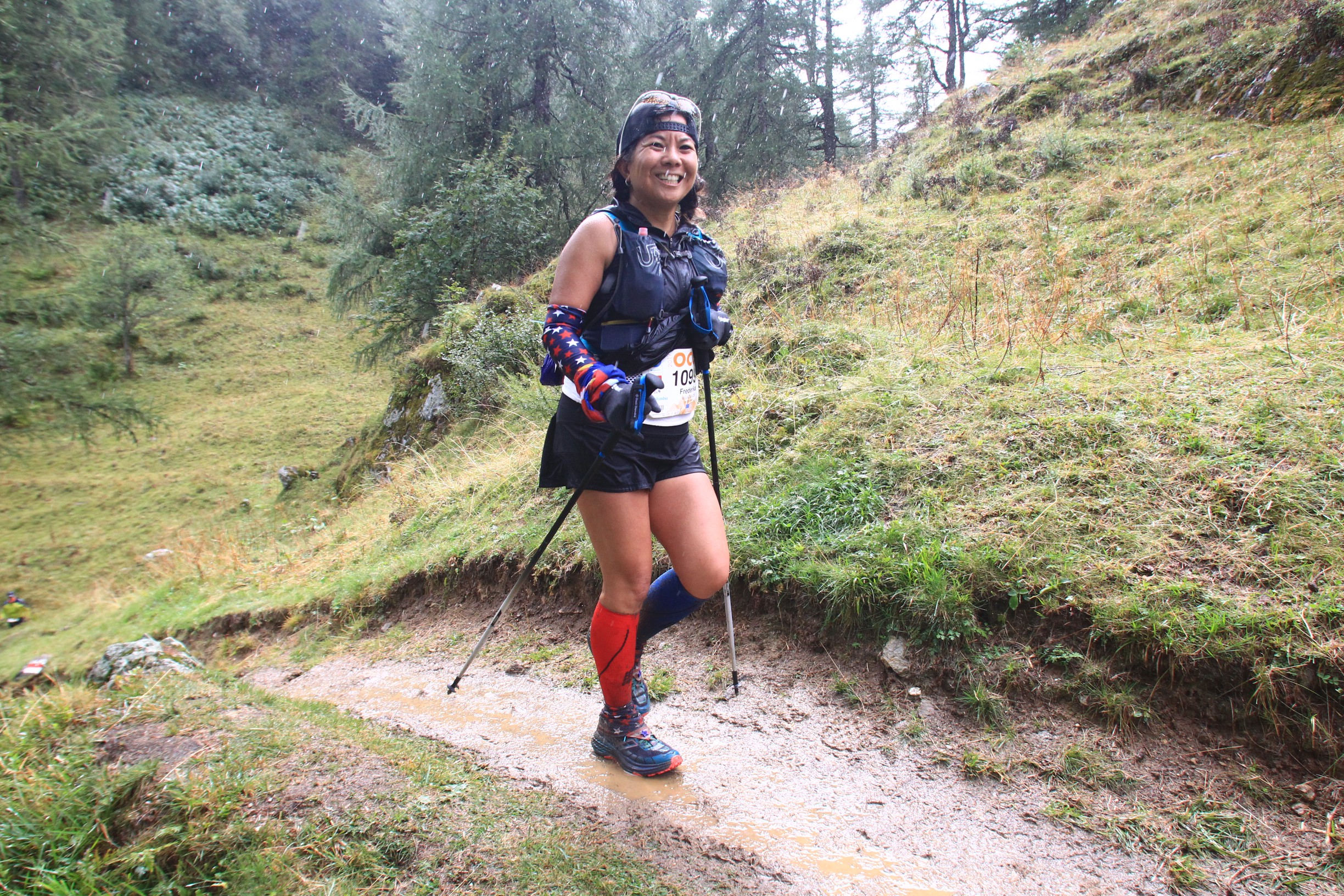
Then it started getting steeper and more technical. Finally, we emerged from the single track into a meadow. It was now dusk and foggy; visibility was poor. I could tell from the silhouettes in front of me that we were still climbing. This was the hardest part of the course for me, mentally and physically. I was deeply exhausted, and the aid station was nowhere in sight. It was like a scene from a zombie movie.
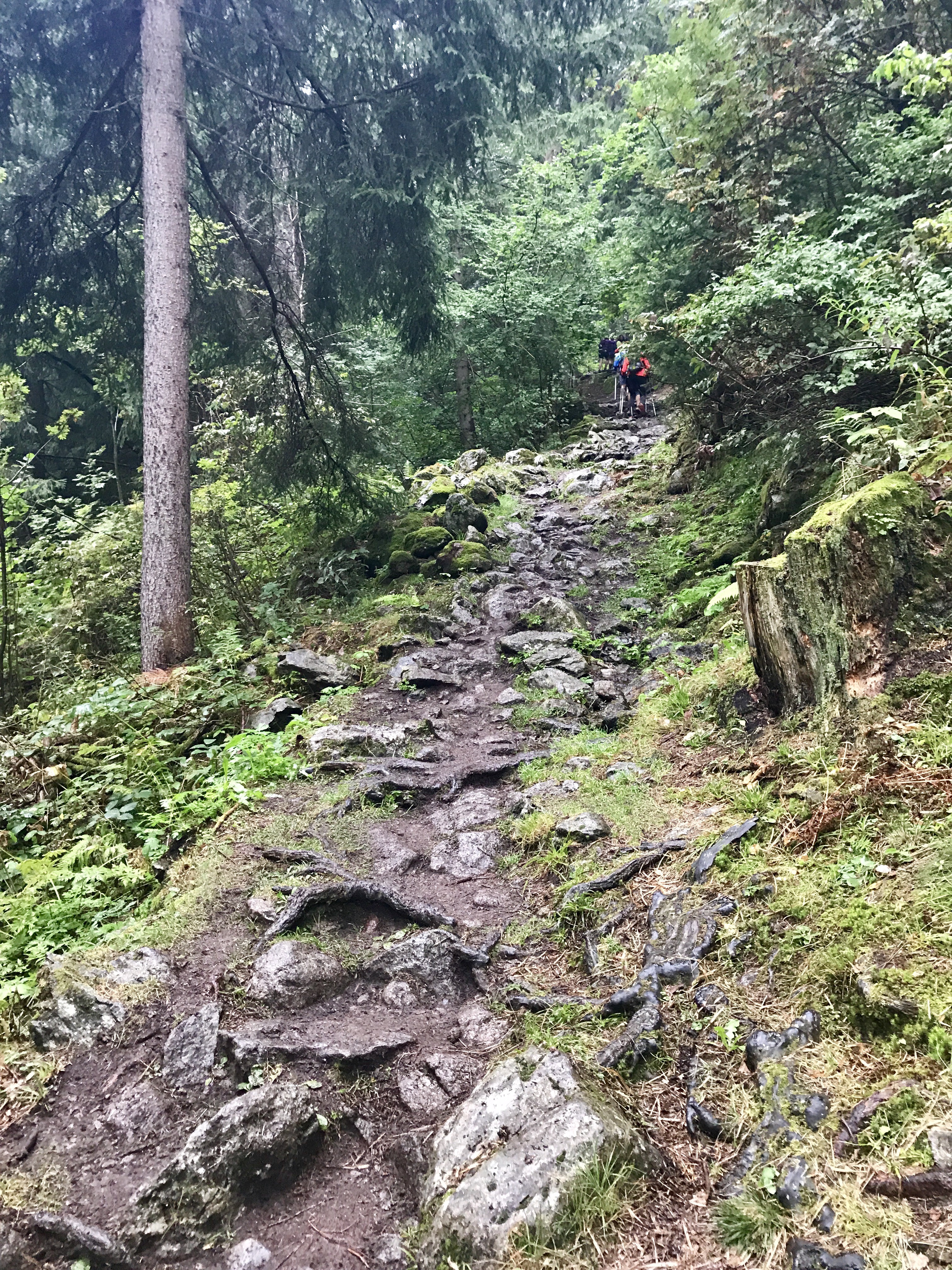
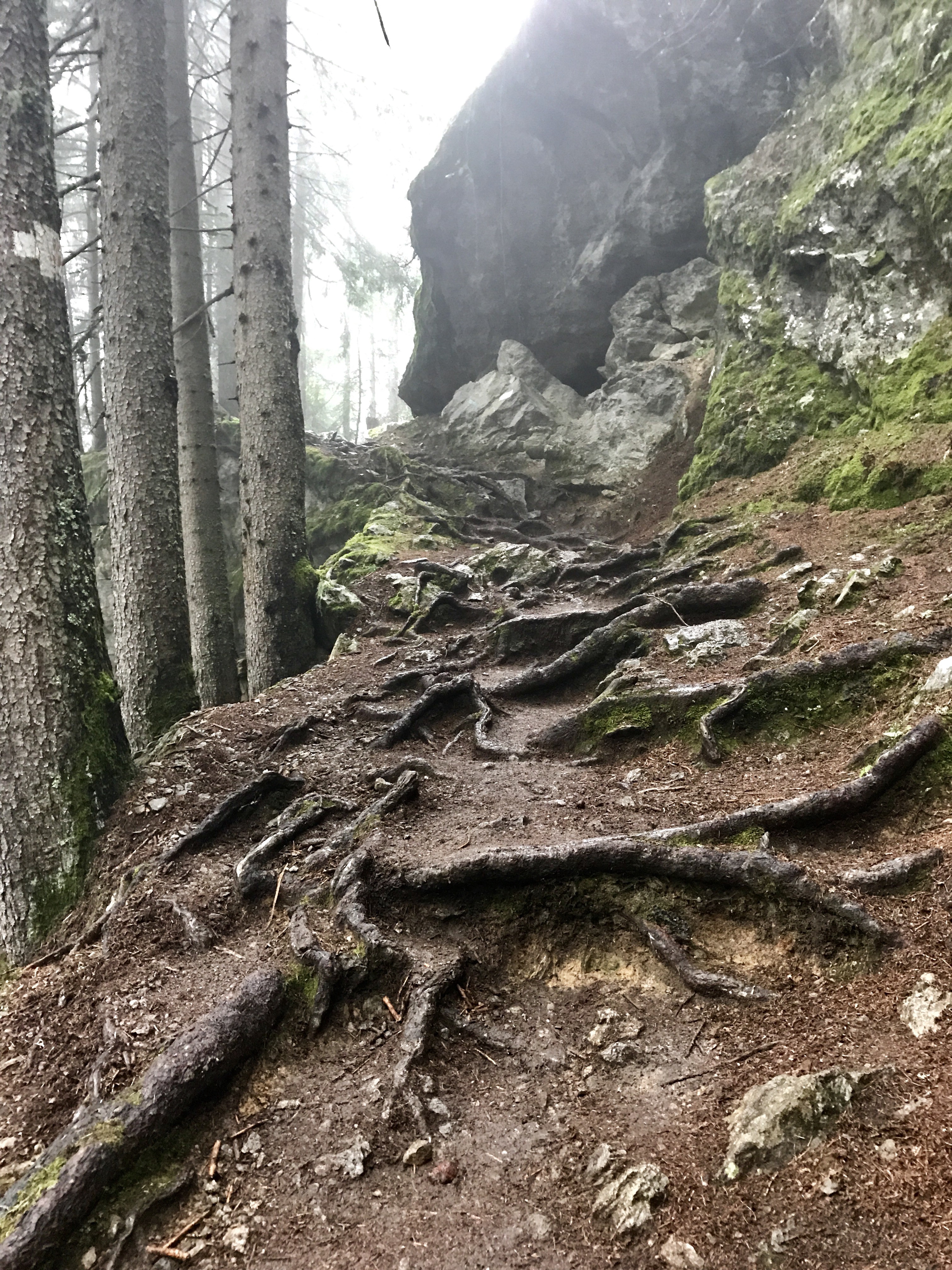
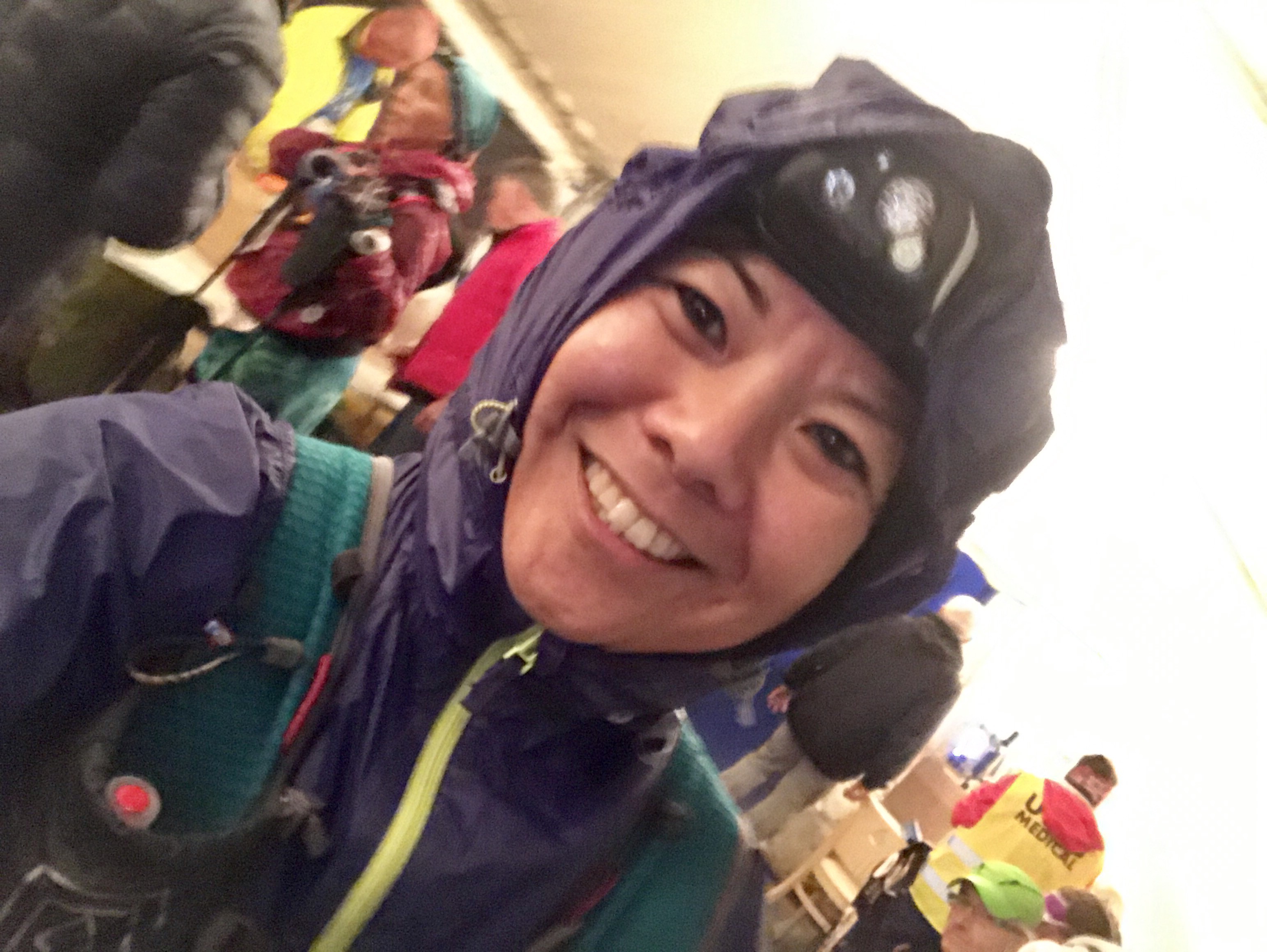
At long last, I arrived at La Flegere, 6,100 ft above sea level, at 8:12 pm — it took me 1 hour and 47 minutes to hike a 5K!!! I lingered at this aid station to collect myself. The volunteers were so kind — they could tell many of us were running on fumes. I ate two bowls of soup, drank coffee, talked to the other runners, and layered up. The good news was that we had 5 miles left, and it was all downhill to Chamonix. The not-so-good news was that it was cold, dark, and wet. I put on every top I had — tank top, long-sleeved dry wick shirt, running vest, and my waterproof jacket. Then I donned my headlamp and with a deep breath, I stepped into the cold, dark night.
La Flegere to Chamonix (M30.1-M34.8)
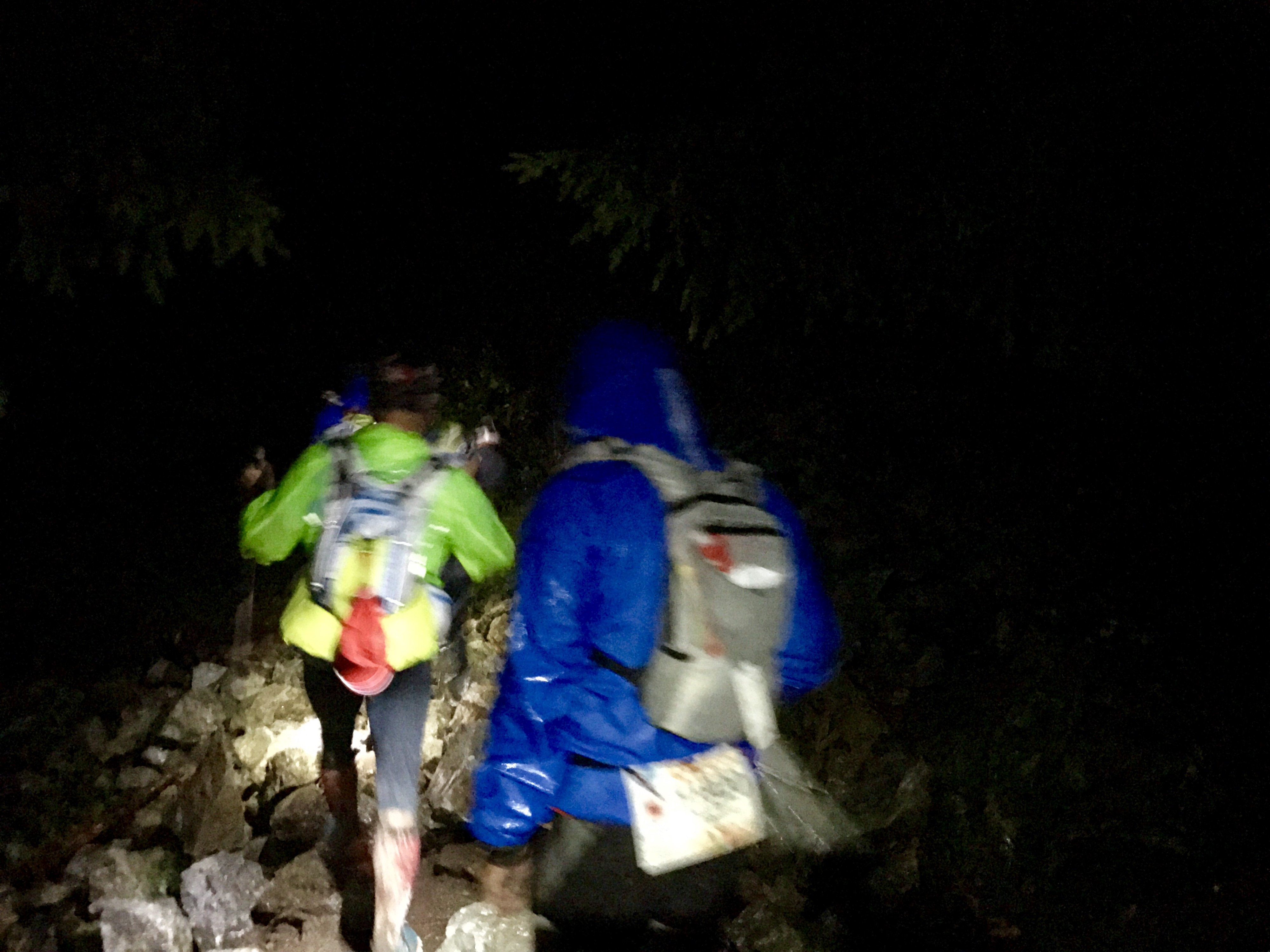
The last 5 miles of the race is 2,700 ft of downhill. I started following a man in front of me, but about a quarter mile from the tent, we realized there were no markers. So we backtracked until we found the reflective markers. He let me take the lead. Other runners followed us and soon we had a line of 5-6 people descending the single-track trail. It was technical so we couldn’t run safely, but we hiked with purpose. Although none of us knew each other, and we spoke different languages, we became a pack with a unified goal. The only sounds you could hear were our footsteps and the thump of our trekking poles on the ground.
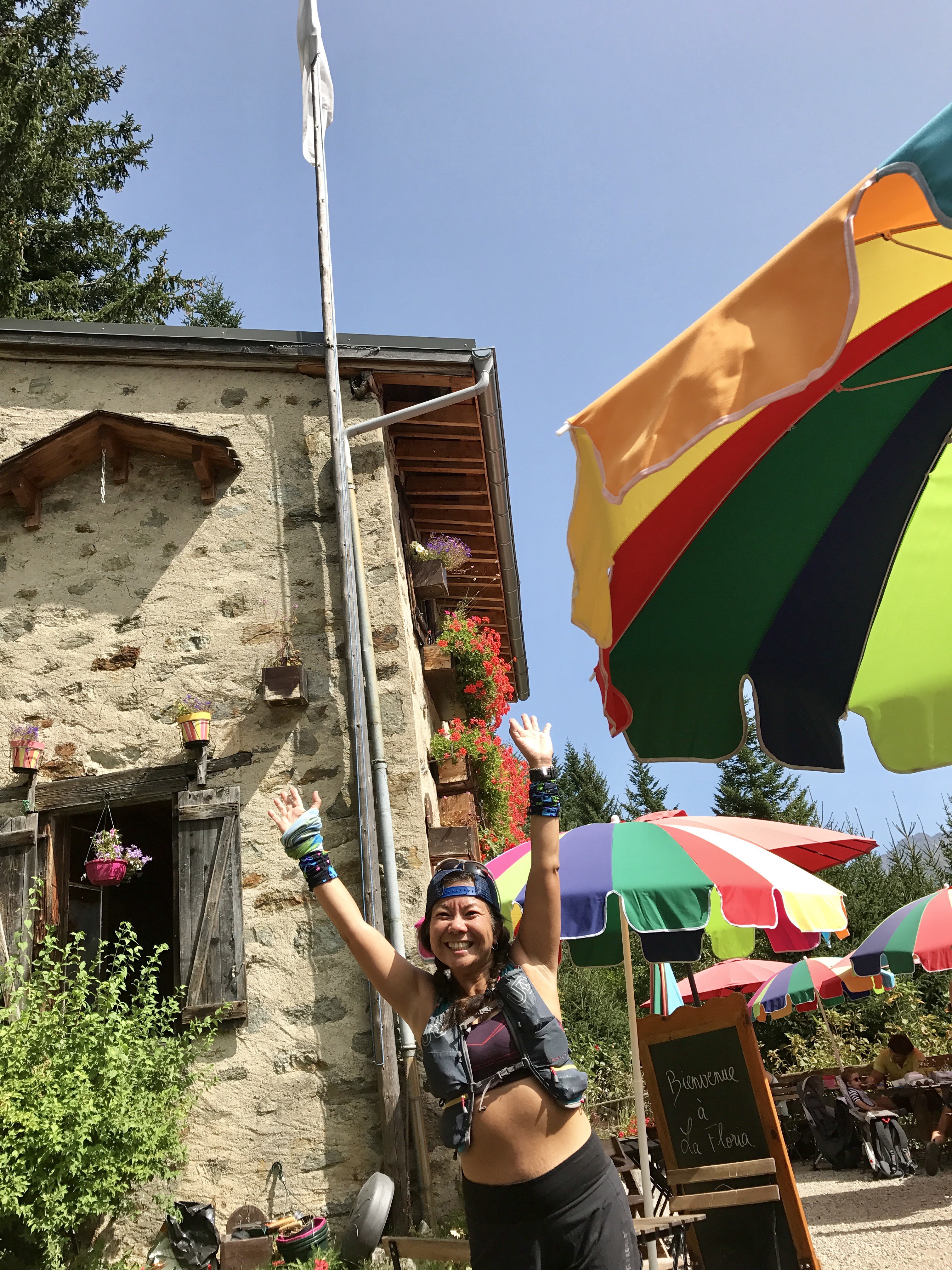
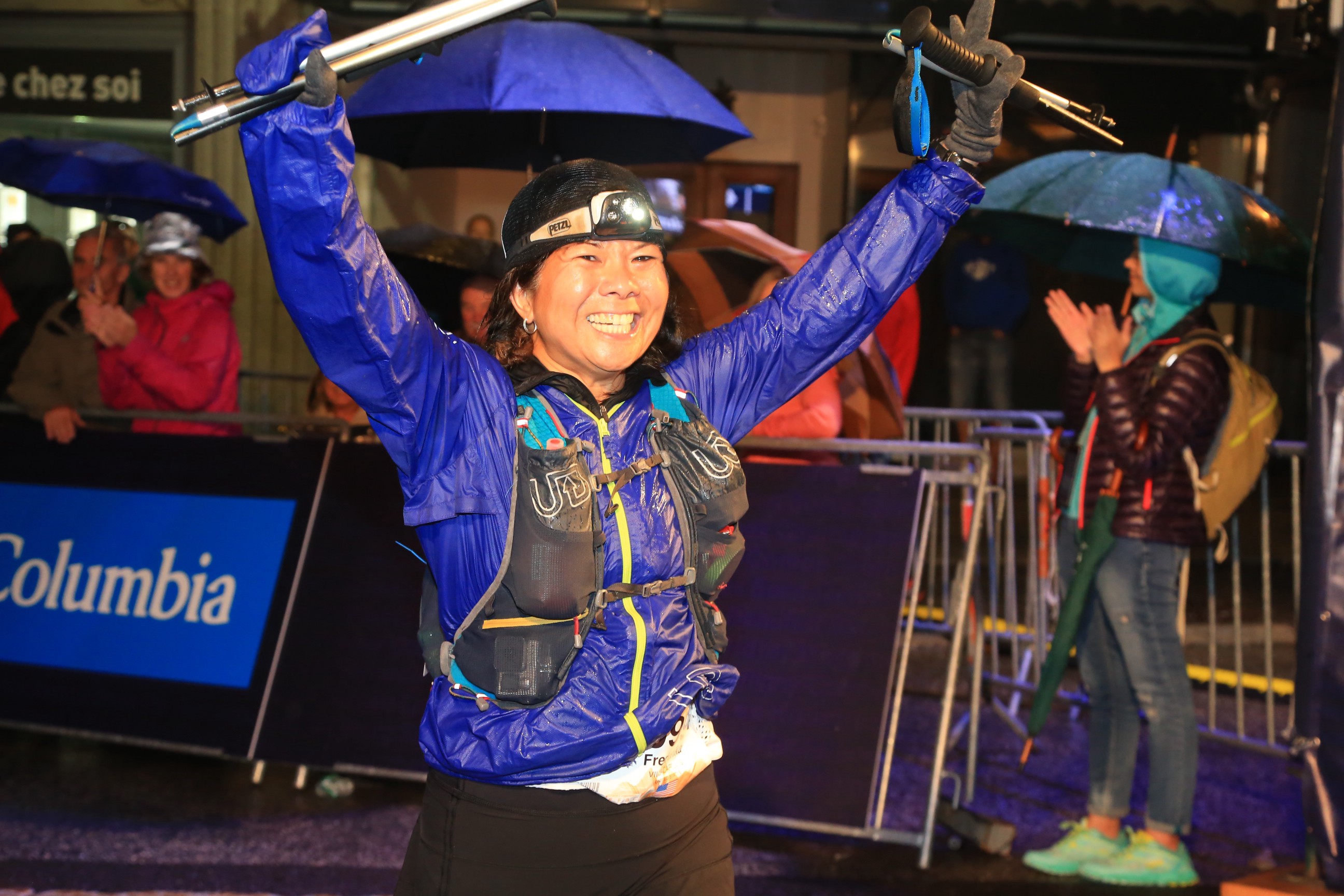
With about 2 miles left, we passed by Chalet de la Floria, the same chalet I saw on my shakeout run. I knew the remaining miles were runnable. So I set off on a slow jog. Eventually, I reached the road. I followed the signs and ran alongside the river Arve, past the expo, then down the finish chute. People were cheering. “Bravo!” they yelled, as they clapped and banged their hands on the boards on the metal fences. Finally, I made that last turn and there it was, the finish line arch!
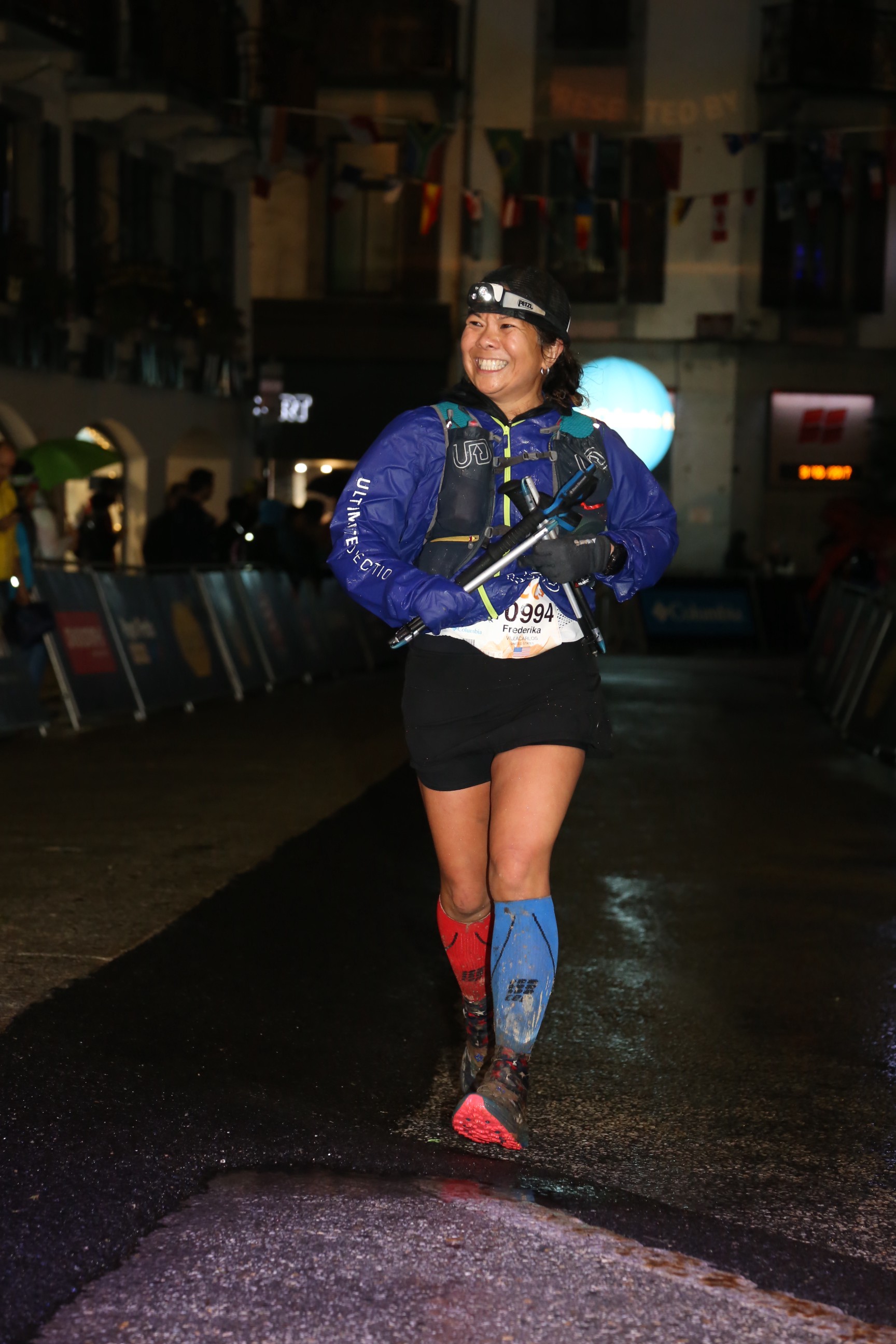
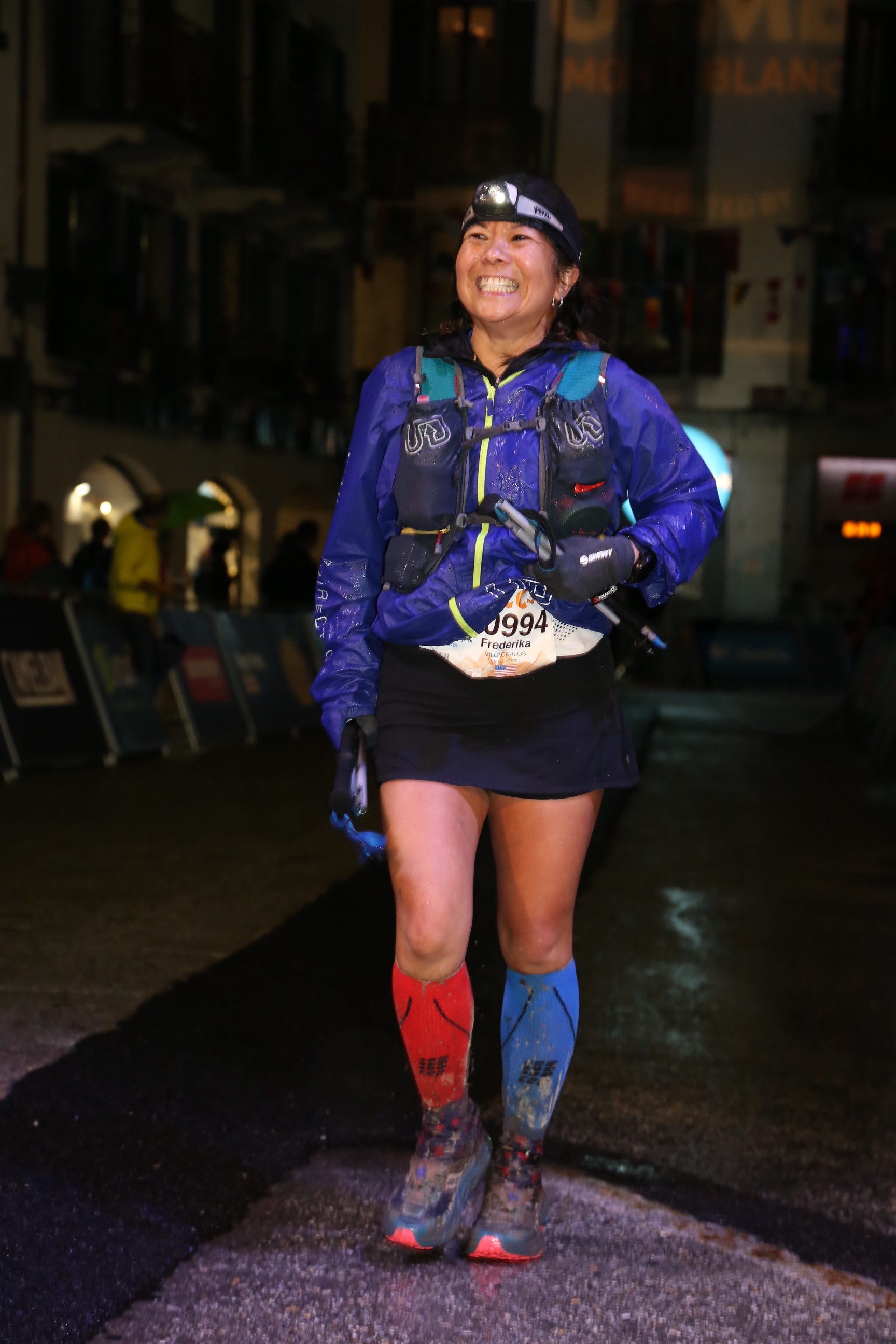
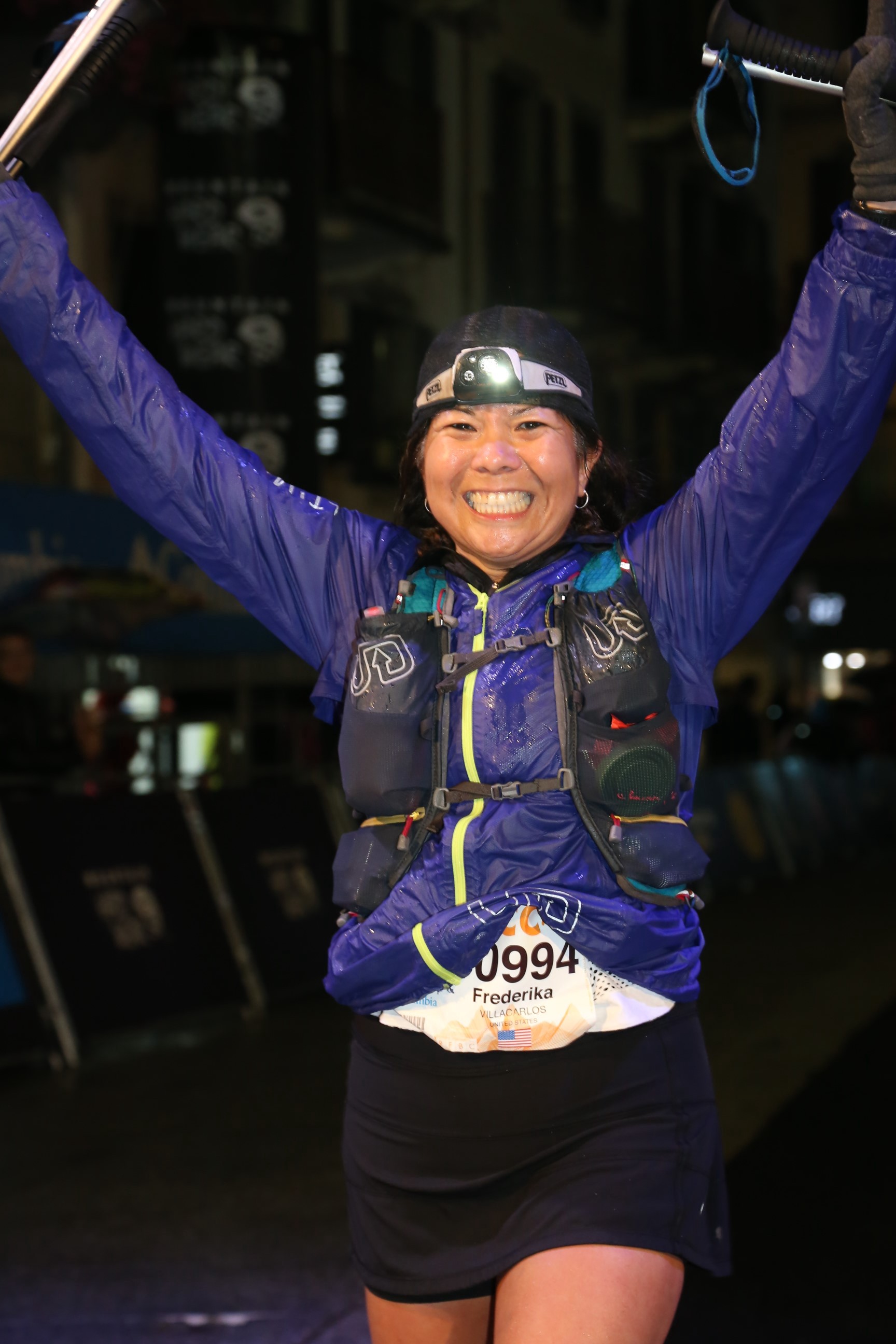
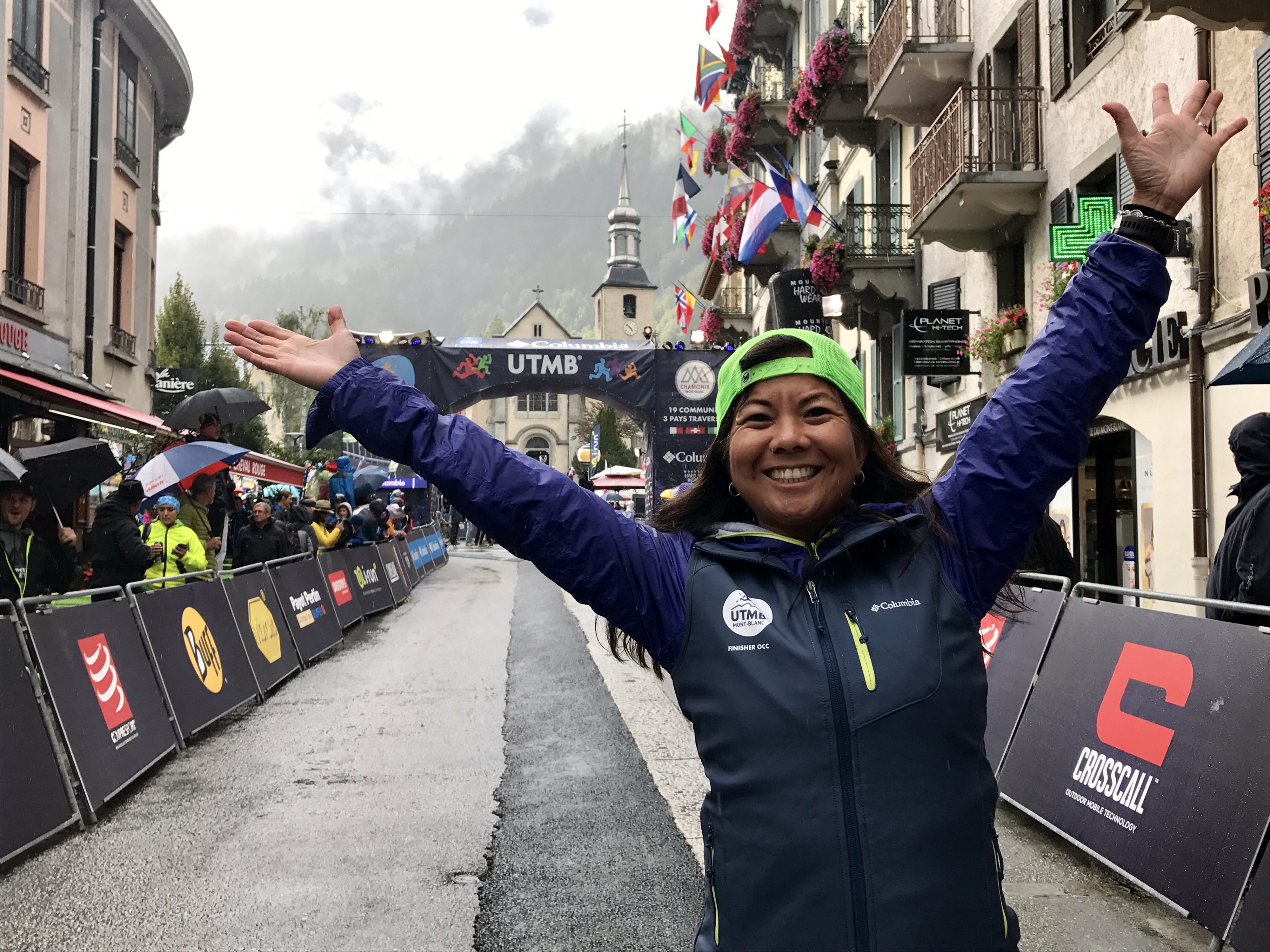
It was surreal! I’ve seen this scene on video many times, runners coming down the chute with their hands up in the air. This time, it was my turn. After 35 miles and over 11,000 feet of elevation gain, and countless highs and lows, I crossed the UTMB finish line at 10:21 pm. I am an OCC finisher.
Finish time:14:06:56 | Ranking: 1433
Post script
- Finishers get a finisher’s vest.
- There were 1,565 starters and 1,468 finishers. Most of the DNFs happened at Trient and Vallorcine.
- My friends and family around the world were able to track my progress and watch me online through UTMB’s exceptional live coverage.
- On Friday, we went on a day trip to Zermatt, Switzerland with hopes of seeing the Matterhorn. Unfortunately, it hid in the fog. But we got to take a nice easy hike on the Matterhorn Trail. I wore my Compression Clothing electric blue compression socks to help with recovery.
- On Friday night and into Saturday, I tracked the UTMB runners. I got to spectate in Vallorcine and Chamonix and cheer on the courageous runners completing their 100-mile journey around Mont Blanc.
- Evidently, I now have enough points for OCC, CCC, or TDS. I can’t wait to go back and do it again!
 Life’s a Peach.Run